
2026-03-07T09:00:00.000Z
Custom Cat Litter Packaging: Structure, Thickness, and Heavy-Duty Pouch Tips
Learn how to choose custom cat litter pouches with handle, side gusset, viewing window, strong sealing, and suitable PET/PE material structure for heavy-duty pet packaging.
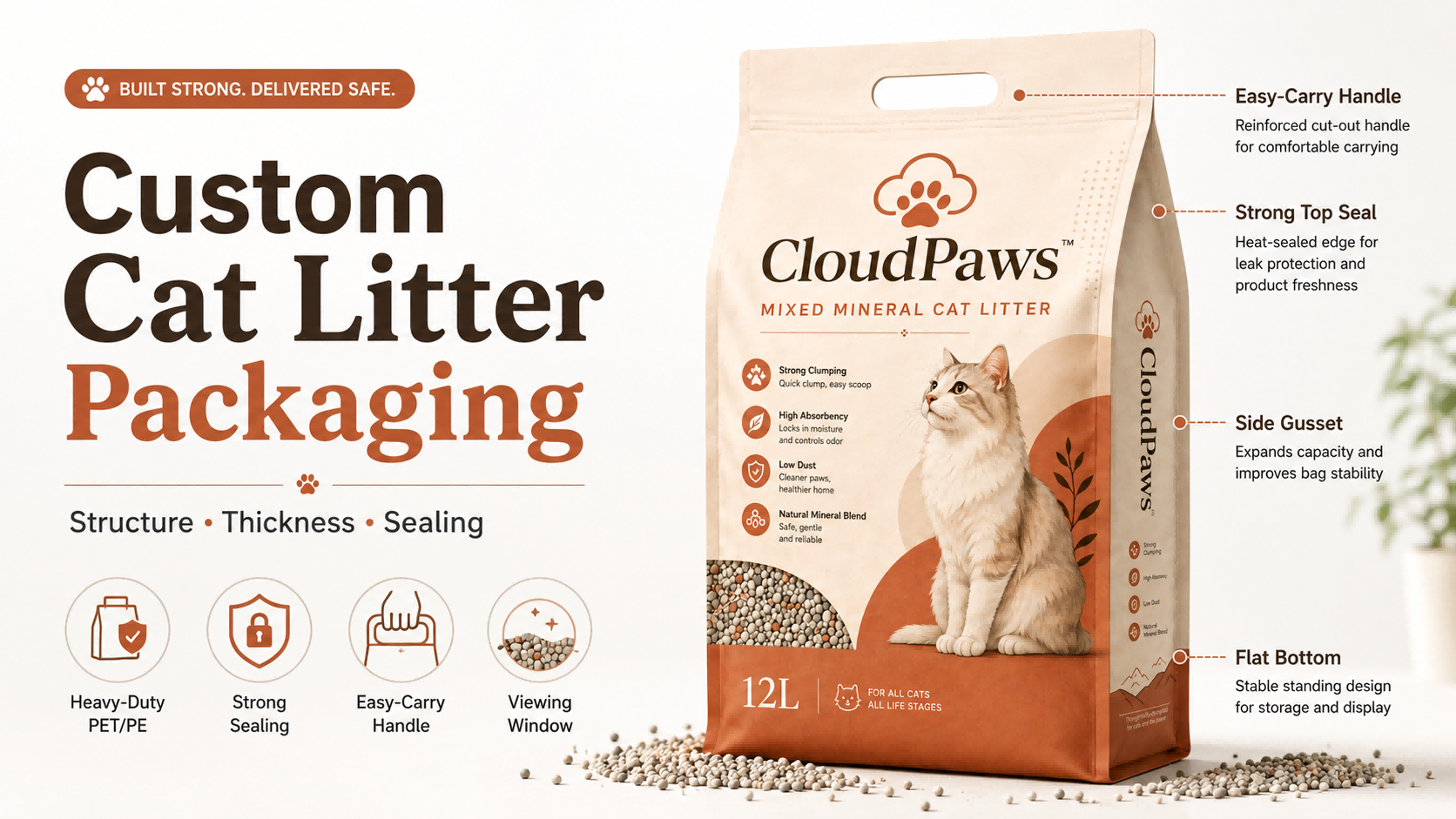
Custom Cat Litter Packaging: What Pet Brands Should Check Before Ordering
For pet food, cat litter, pet treats, and other heavy pet products, packaging is not just about printing a nice design on a bag.
A good pouch needs to protect the product, support the filling weight, stay stable during storage, and hold up during transport. If the material structure or sealing strength is not suitable, the packaging may look fine at first, but problems can appear after filling, shipping, or customer use.
Some pet brands focus only on the lowest unit price when ordering custom pouches. But for heavy products like cat litter, a cheaper bag can sometimes lead to higher hidden costs: unclear printing, weak bag stiffness, poor sealing, moisture problems, leakage, or damaged customer experience.
Before ordering custom cat litter bags, pet brands should first check a few practical questions:
What is the filling weight or volume?
Is the product sensitive to moisture?
Are the particles heavy or abrasive?
Will the bags be shipped by courier or pallet?
Does the bag need to stand on shelves?
Is a handle needed for easier carrying?
Is a clear window helpful for product visibility?
What material thickness is suitable for the product?
These details directly affect pouch style, material structure, thickness, sealing performance, and final cost.
Why Cat Litter Bags Need Stronger Packaging
Cat litter is different from lightweight snacks or coffee beans. It is usually heavier, denser, and more demanding on the pouch structure.
For example, mineral cat litter, tofu cat litter, mixed litter, or clumping litter may create pressure inside the bag during filling, stacking, and transport. If the pouch material is too thin or the seal strength is not enough, the bag may deform, leak, or break during handling.
Moisture is another important factor. Cat litter needs to stay dry before use. If the packaging does not provide enough moisture resistance, the product may clump earlier than expected and affect the customer’s experience.
That is why cat litter packaging should be designed around real product use, not only around appearance.
Case Reference: 12L Heavy-Duty Cat Litter Stand-Up Bag
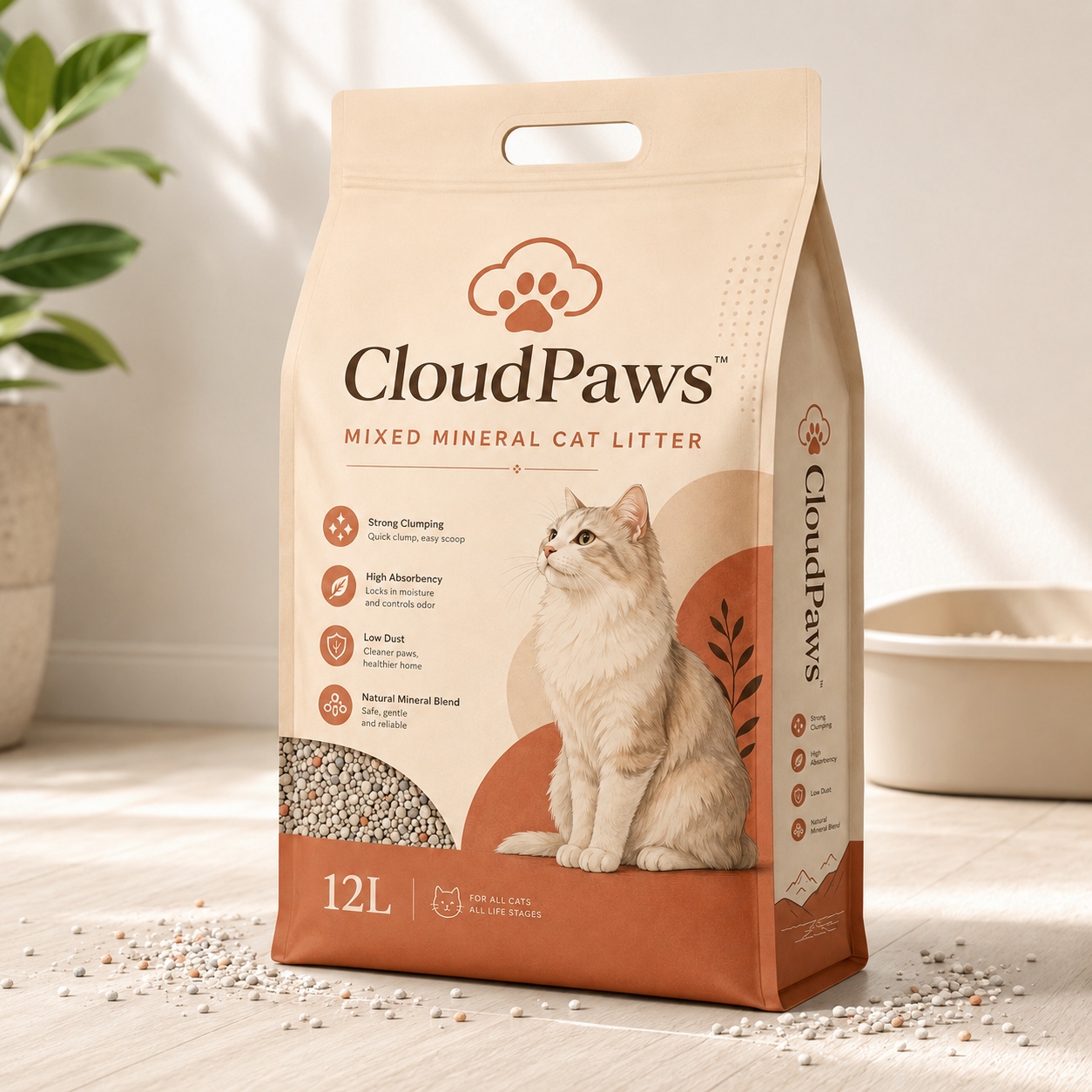
This case uses a stand-up heavy-duty pouch with handle, designed for cat litter and similar heavy pet products.
The goal of this packaging structure is simple: make the bag easier to carry, stronger during transport, more stable for display, and more suitable for moisture-sensitive granular products.
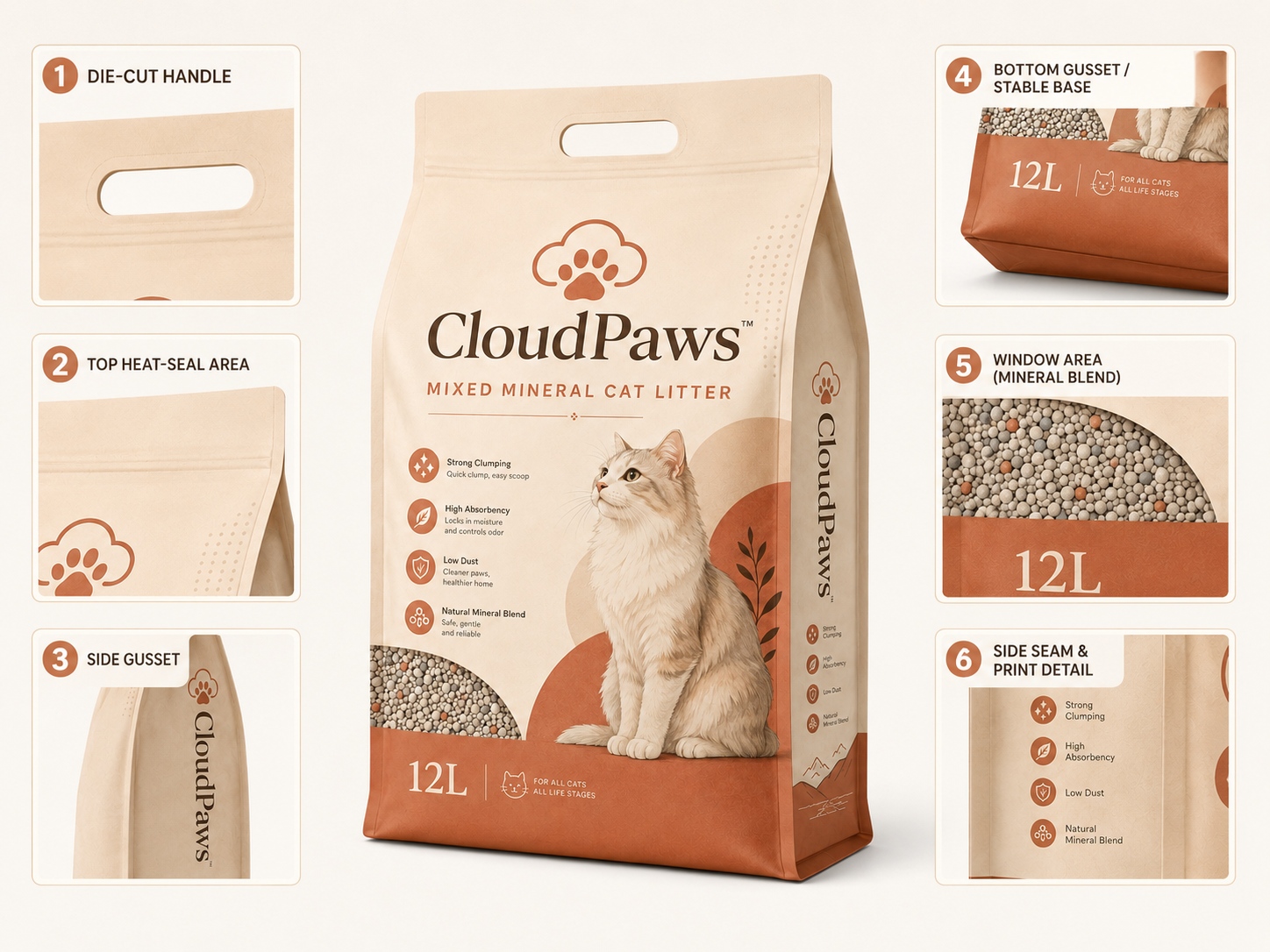
1. Reinforced Handle for Easier Carrying
A 12L cat litter bag can be heavy for end users. A reinforced cut-out handle makes the bag easier to carry and improves the overall user experience.
For pet brands, this small detail can make the product feel more practical and retail-ready.
2. Side Gusset for Higher Capacity
The side gusset helps expand bag capacity and improves the three-dimensional shape of the pouch.
For heavy pet products, this structure gives the bag better volume, better stability, and a stronger shelf presence.
3. Stable Bottom Gusset for Display and Storage
A stable bottom gusset allows the bag to stand upright more easily. This is useful for retail shelves, warehouse stacking, product photos, and customer storage at home.
A bag that stands well also helps the product look more professional.
4. Viewing Window for Product Visibility
A clear viewing window allows customers to see the cat litter particles before purchase.
For products such as mineral cat litter or mixed cat litter, this can help build trust because customers can directly check the color, texture, and particle condition.
The window size and position should be designed carefully so it does not weaken the overall bag structure.
5. Strong Heat-Sealed Edges
For cat litter packaging, sealing is one of the most important details.
Strong heat sealing helps reduce the risk of leakage, edge opening, and product loss during transport. This is especially important for granular products that may press against the bag during handling.
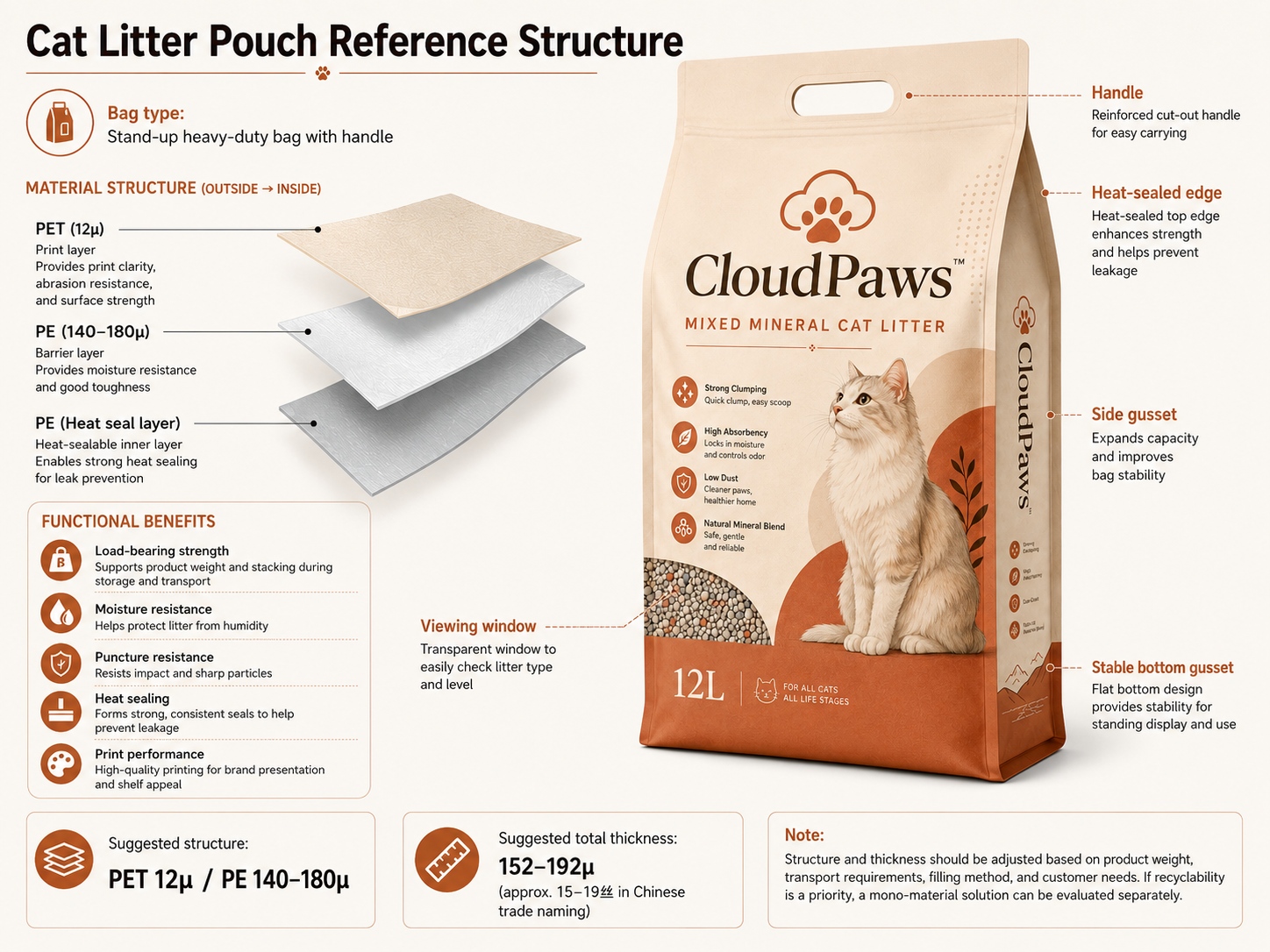
Suggested Material Structure
For this type of heavy-duty cat litter pouch, a practical reference structure can be:
PET 12μ / PE 140–180μ
Suggested total thickness:
152–192μ
Approx. 15–19 silk in Chinese trade naming
PET Outer Layer
The PET layer supports printing clarity, surface strength, and better bag appearance. It helps the pouch look cleaner and more professional on shelves.
PE Main / Barrier Layer
The PE layer provides moisture resistance, flexibility, and toughness. For cat litter packaging, this layer helps support product weight and resist impact during transport.
PE Inner Heat-Seal Layer
The inner PE layer supports heat sealing. A stable sealing layer helps improve edge strength and reduce leakage risk.
This structure is only a reference. The final material should be adjusted based on product weight, filling method, shipping conditions, storage needs, and budget.
For brands that require recyclable packaging, a mono-material solution can also be evaluated separately.
What Pet Brands Should Confirm Before Ordering
Before placing a custom cat litter pouch order, it is better to prepare the following information:
✅ Product type
✅ Filling weight or volume
✅ Particle size and texture
✅ Moisture sensitivity
✅ Required pouch size
✅ Preferred pouch style
✅ Need for handle or zipper
✅ Need for clear window
✅ Estimated order quantity
✅ Target sales market
✅ Shipping method
With this information, it becomes much easier to recommend a suitable pouch structure instead of guessing from pictures only.
How TM-Future Supports Custom Pet Packaging Projects
TM-Future helps brands choose practical flexible packaging solutions based on real product needs.
For cat litter, pet food, pet treats, and other pet product packaging, we help review product weight, pouch style, material structure, sealing strength, printing method, functional features, and MOQ direction.
For food-contact or pet food packaging projects, available supplier material documents may be provided based on the selected structure. If a project requires specific third-party testing, testing can be coordinated after the final material structure, product use, and destination market are confirmed.
A good pouch is not only about unit price. It should protect the product, support transportation, improve user experience, and help the brand look reliable.
For heavy pet products, choosing the right structure from the beginning is usually more cost-effective than fixing packaging problems later.