
2026-02-28T09:00:00.000Z
Custom Coffee Bags: How to Choose Valve Pouches, Materials, and Printing Method
Learn how to choose custom coffee bags with one-way degassing valve, PET/VMPET/PE material structure, matte finish, and the right printing method for low MOQ or bulk orders.
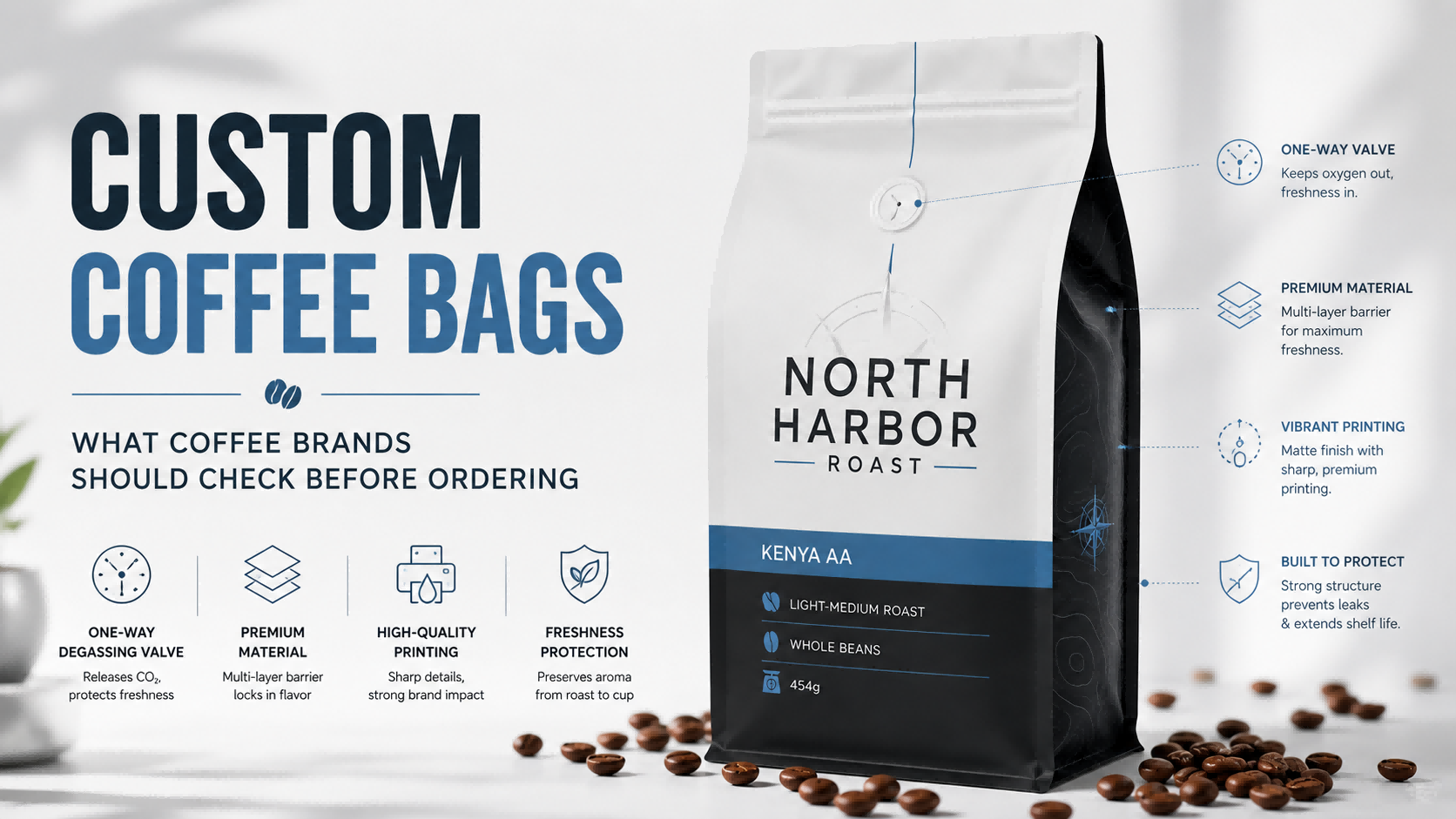
Custom Coffee Bags: What Coffee Brands Should Check Before Ordering
For coffee brands, packaging is not only a bag.
It is part of the product experience.
Before customers taste the coffee, they first see the pouch. They feel the surface, check the design, notice the valve, read the roast information, and decide whether the product feels fresh, premium, and trustworthy.
But many coffee brands face the same problem when sourcing custom coffee bags:
One supplier offers a very low price.
Another supplier talks about material structure, valve quality, printing method, and MOQ.
Some bags look almost the same in pictures, but the real difference only appears after filling, storage, and customer use.
So how should a coffee brand choose the right custom coffee bag?
The answer is not simply choosing the cheapest pouch. For roasted coffee beans and ground coffee, the key is to balance freshness protection, aroma retention, shelf presentation, printing quality, MOQ, and total project risk.
Why Coffee Packaging Needs More Than a Good-Looking Design
Coffee is sensitive to oxygen, moisture, light, and aroma loss.
After roasting, coffee beans continue to release carbon dioxide. If the bag cannot release gas properly, the pouch may swell. If too much oxygen enters the bag, the coffee may lose freshness and flavor faster.
This is why many roasted coffee bags use a one-way degassing valve. The valve helps release CO₂ from inside the bag while reducing oxygen entry from outside.
For coffee packaging, the common problems are not always obvious at the beginning. A pouch may look good in photos, but after production, brands may notice issues such as:
Logo or text not sharp enough
Brand colors not matching expectations
Bag surface looking cheaper than expected
Weak valve position or poor valve appearance
Poor aroma protection after storage
Pouch swelling after filling roasted beans
Side seal or bottom gusset not stable enough
Material too soft for shelf display
MOQ too high for testing new coffee origins
Too much inventory before the product is proven
For a coffee brand, these issues can affect more than the packaging cost. They can affect customer trust, product reviews, and repeat purchases.
Common Mistake: Choosing Coffee Bags Only by Unit Price
For new coffee brands, small roasters, and private label sellers, it is tempting to choose the lowest unit price.
But coffee packaging has hidden costs.
If the material barrier is not suitable, freshness may suffer.
If the printing is unclear, the brand looks less professional.
If the MOQ is too high, cash flow and inventory pressure increase.
If the design is not tested before bulk production, the brand may be stuck with thousands of bags that do not feel right.
A better question is not:
How cheap can this coffee bag be?
A better question is:
Which coffee pouch structure fits my product stage, sales channel, and freshness requirements?
This is where packaging decisions become more practical.
Case Reference: 454g Flat Bottom Coffee Bag with One-Way Valve
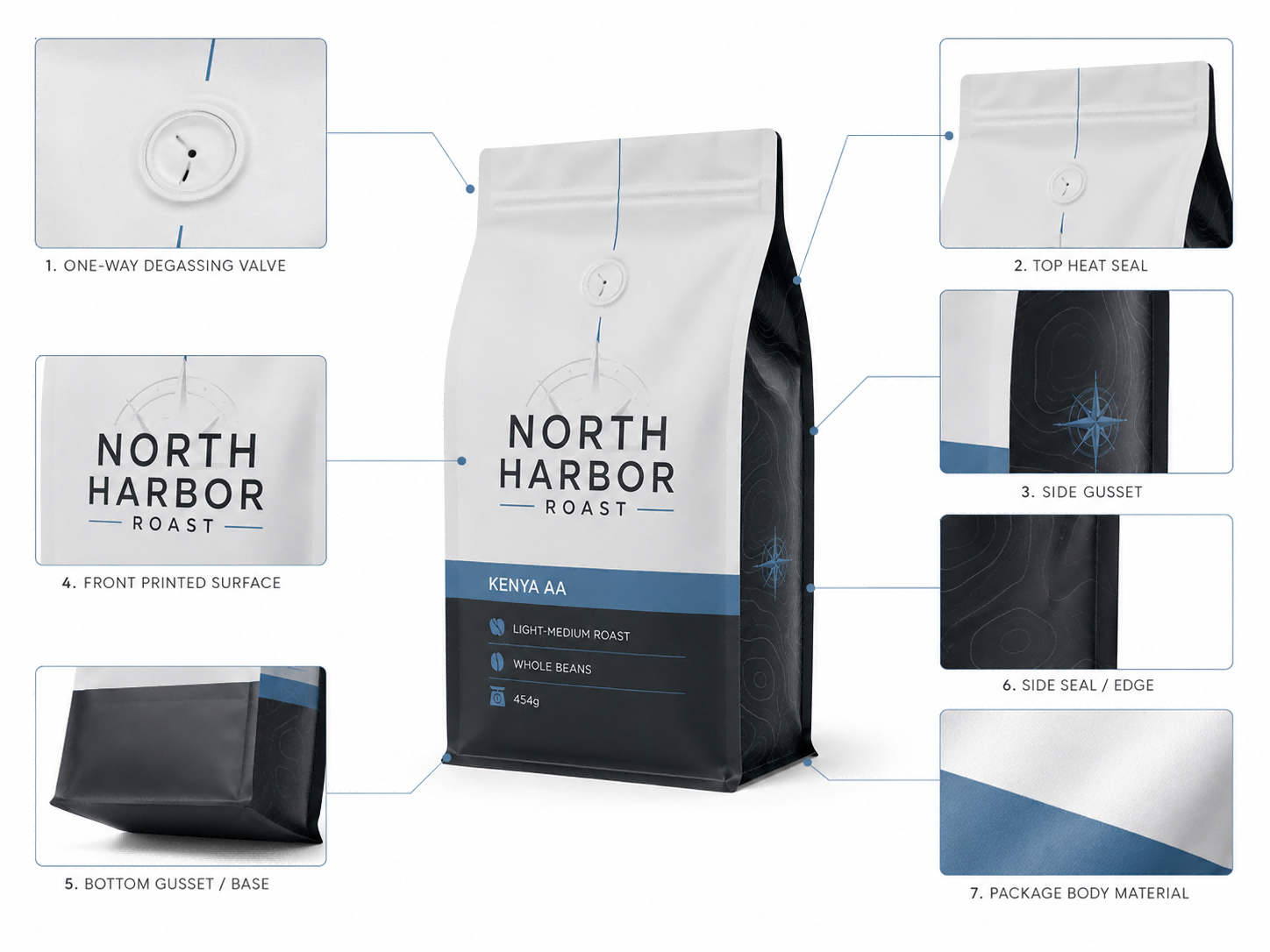
This case uses a flat bottom coffee pouch with a one-way degassing valve, designed for roasted whole coffee beans.
The design direction is clean and modern: white front panel, black side gusset, blue accent line, matte surface, and a premium retail-ready look.
From a buyer’s point of view, this type of pouch solves several real coffee packaging needs.
1. One-Way Degassing Valve for Roasted Coffee
For roasted coffee beans, a one-way valve is one of the most important functional details.
Freshly roasted coffee releases CO₂ after roasting. If the bag is fully sealed without a proper valve, pressure may build inside the package. A one-way valve helps release gas while limiting outside oxygen entry.
This is especially useful for:
Whole bean coffee
Freshly roasted coffee
Specialty coffee
Small-batch roasters
Premium coffee sold online or in retail stores
A good valve is not just a small accessory. It supports freshness, aroma protection, and a better customer experience.
2. Flat Bottom Structure for Better Shelf Display
The flat bottom pouch gives the bag a stable base and a box-like shape.
Compared with a simple pillow bag or soft stand-up pouch, a flat bottom coffee bag often looks more structured and premium. It can stand better on shelves, in product photos, and during storage.
For coffee brands selling through retail stores, online shops, subscription boxes, or gift sets, this structure helps the product look more professional.
3. Side Gusset for More Volume and Stability
The side gusset allows the pouch to expand and hold more coffee while keeping a clean front panel for branding.
For 250g, 340g, 454g, or 1kg coffee bags, the side gusset helps improve filling volume and bag shape.
It also gives the package better visual depth, especially for premium coffee products.
4. Matte Surface for a Premium Feel
A matte finish can make coffee packaging feel cleaner, calmer, and more premium.
It reduces glare, helps product photography look better, and gives the bag a softer hand feel.
For specialty coffee brands, matte packaging often works well with minimalist artwork, origin labels, roast level icons, and clean typography.
However, matte finish should still be matched with the right printing method and material surface, so the final result does not look dull or unclear.
5. Strong Heat Seal and Side Seal
Coffee bags need reliable sealing.
A strong top heat seal helps lock in freshness before the customer opens the bag. Side seals and bottom gussets need to stay stable during filling, shipping, storage, and shelf display.
For coffee brands using e-commerce shipping, this is especially important because bags may be squeezed, stacked, and handled multiple times before reaching the customer.
Suggested Material Structure for Coffee Bags
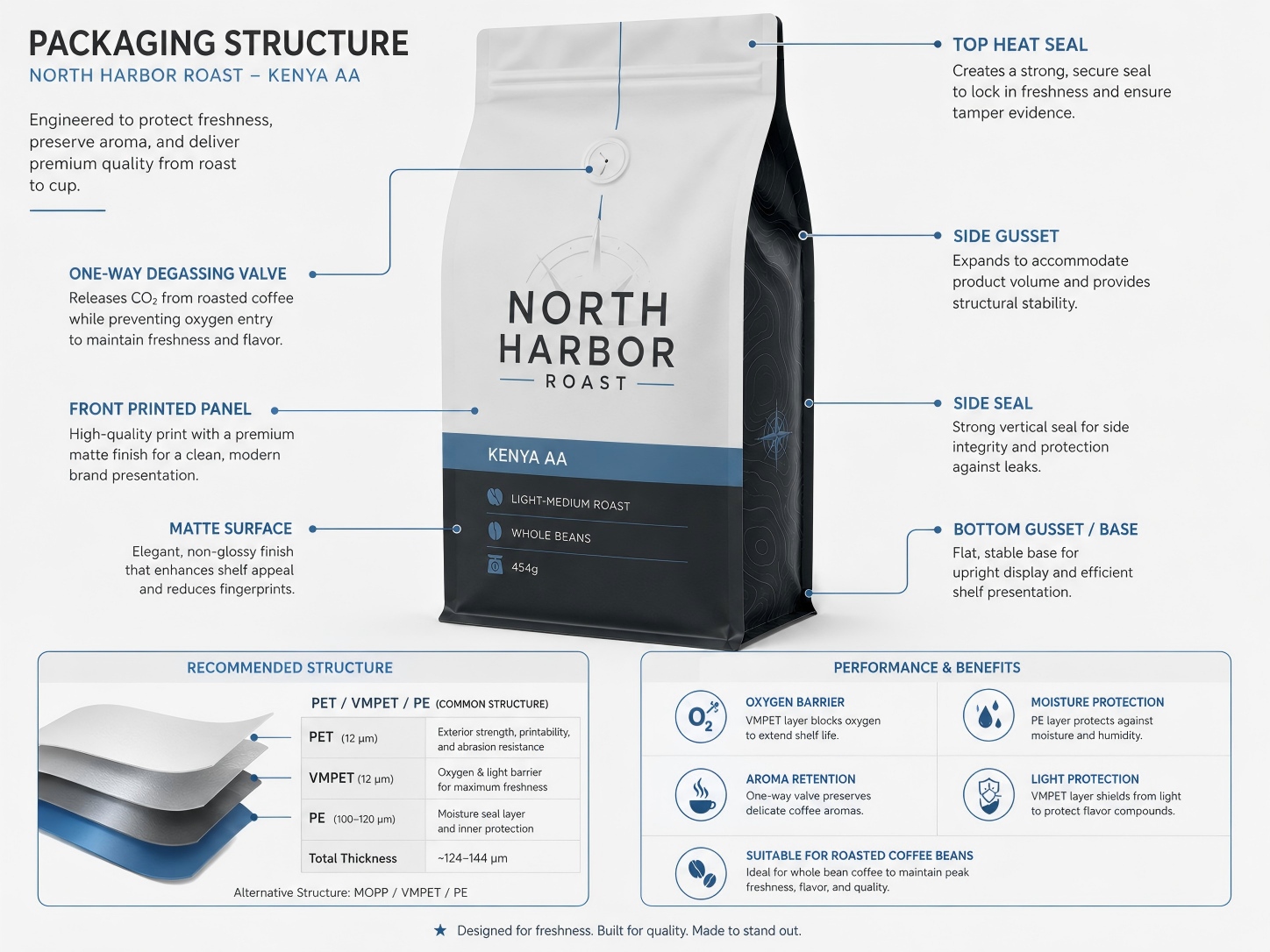
For roasted coffee beans, a common high-barrier reference structure is:
PET / VMPET / PE
A typical reference thickness may be:
PET 12μ / VMPET 12μ / PE 100–120μ
Total thickness: around 124–144μ
PET Outer Layer
The PET layer supports printing clarity, surface strength, and a clean brand presentation.
It helps the pouch hold better printing detail, especially for logos, roast information, icons, and fine text.
VMPET Barrier Layer
The VMPET layer provides oxygen and light barrier performance.
For coffee, this is important because oxygen and light can affect aroma, freshness, and flavor stability.
PE Inner Heat-Seal Layer
The PE inner layer supports heat sealing and direct product contact.
It helps form a stable seal and protects the coffee inside the pouch.
Alternative structures may include:
MOPP / VMPET / PE
PET / AL / PE
Kraft Paper / VMPET / PE
The final structure should be selected based on shelf-life target, bag size, valve requirement, product type, appearance preference, and budget.
Digital Printing or Gravure Printing: Which One Fits Coffee Brands Better?
Coffee brands often have multiple SKUs:
Different origins
Different roast levels
Seasonal blends
Decaf options
Subscription packaging
Limited edition labels
Private label designs
This makes printing choice very important.
Digital Printing for Low MOQ and Multi-SKU Testing
Digital printing is a good option when a coffee brand wants to test several designs or start with lower quantities.
It can help with:
✅Low MOQ projects
✅Multiple coffee origins
✅Small-batch product launches
✅Seasonal packaging
✅Artwork testing
✅Faster turnaround
✅No plate fee
For example, a roaster may want 500 bags for Kenya AA, 500 bags for Colombia, and 500 bags for Ethiopia. Digital printing can be more flexible for this kind of SKU mix.
It is useful when the brand is still testing which coffee sells better.
Gravure Printing for Larger Repeat Orders
Gravure printing is more suitable when the artwork is finalized and the order quantity is larger.
It usually requires printing cylinders or plates, so the setup cost is higher at the beginning. But for larger production runs, the unit cost can become more competitive.
Gravure printing is suitable for:
✅Stable coffee products
✅Large repeat orders
✅Fixed artwork
✅Brand color consistency
✅Lower unit cost at scale
✅Long-term supply
For mature coffee brands with stable monthly demand, gravure printing may be a better long-term production method.
At TM-Future, we support both digital printing and gravure printing, depending on project stage, quantity, artwork, and cost target.
What Coffee Brands Should Confirm Before Ordering
Before ordering custom coffee bags, it is helpful to prepare the following information:
Coffee type: whole beans or ground coffee
Filling weight: 250g, 340g, 454g, 1kg, or custom size
Need for one-way degassing valve
Preferred bag style: flat bottom, side gusset, or stand-up pouch
Shelf-life target
Matte or glossy finish
Number of SKUs or origins
Order quantity per design
Artwork readiness
Target market
Need for food-contact documents or testing support
With this information, a packaging supplier can recommend a more practical solution instead of guessing only from a product photo.
How TM-Future Supports Coffee Packaging Projects
TM-Future helps coffee brands and product teams choose practical custom pouch solutions based on real product needs.
For coffee packaging, we can help review bag style, material structure, valve requirement, printing method, surface finish, MOQ direction, and shipping needs.
For new coffee brands or small-batch roasters, digital printing may help reduce launch risk and support multiple SKUs.
For mature coffee products with stable demand, gravure printing may help reduce unit cost for larger repeat orders.
For food-contact packaging projects, available supplier material documents may be provided based on the selected structure. If specific third-party testing is required, it can be coordinated after the final material structure, product use, and destination market are confirmed.
The goal is not to push one fixed pouch type. The goal is to help coffee brands choose packaging that fits their product stage, freshness needs, and budget.
Final Thought
A coffee bag should do more than hold coffee.
It should protect aroma, support freshness, present the brand clearly, and make the customer feel confident before opening the product.
For coffee brands, the right pouch structure can reduce product risk, improve shelf presentation, and support better customer experience.
Before ordering custom coffee bags, do not only compare unit prices. Compare the full packaging solution:
Bag structure
Barrier performance
Valve function
Printing method
MOQ flexibility
Surface finish
Sealing strength
Inventory risk
Long-term cost
A better coffee pouch starts with asking the right questions.