2026-03-07T09:00:00.000Z
Why Material Structure Matters in Flexible Packaging
Learn how film layers, barrier performance, sealing strength, zipper options, and surface finishes affect product protection, shelf life, and brand presentation.
Why Material Structure Matters in Flexible Packaging
When brands choose custom flexible packaging, the pouch shape is only one part of the decision. The material structure is just as important because it affects product protection, shelf life, sealing strength, printing appearance, and the customer experience after purchase.
A good pouch should not only look attractive on the shelf. It should also protect the product during filling, storage, shipping, and daily use.
What Is a Flexible Packaging Material Structure?
Most custom pouches are made from laminated film structures. This means different layers are combined to provide different functions. One layer may support printing, another layer may improve barrier performance, and another layer may help with heat sealing.
Common material structures may include PET/PE, PET/VMPET/PE, Kraft/PET/PE, aluminum foil laminates, transparent films, recyclable options, or other customized combinations depending on the product.
Why Barrier Performance Matters
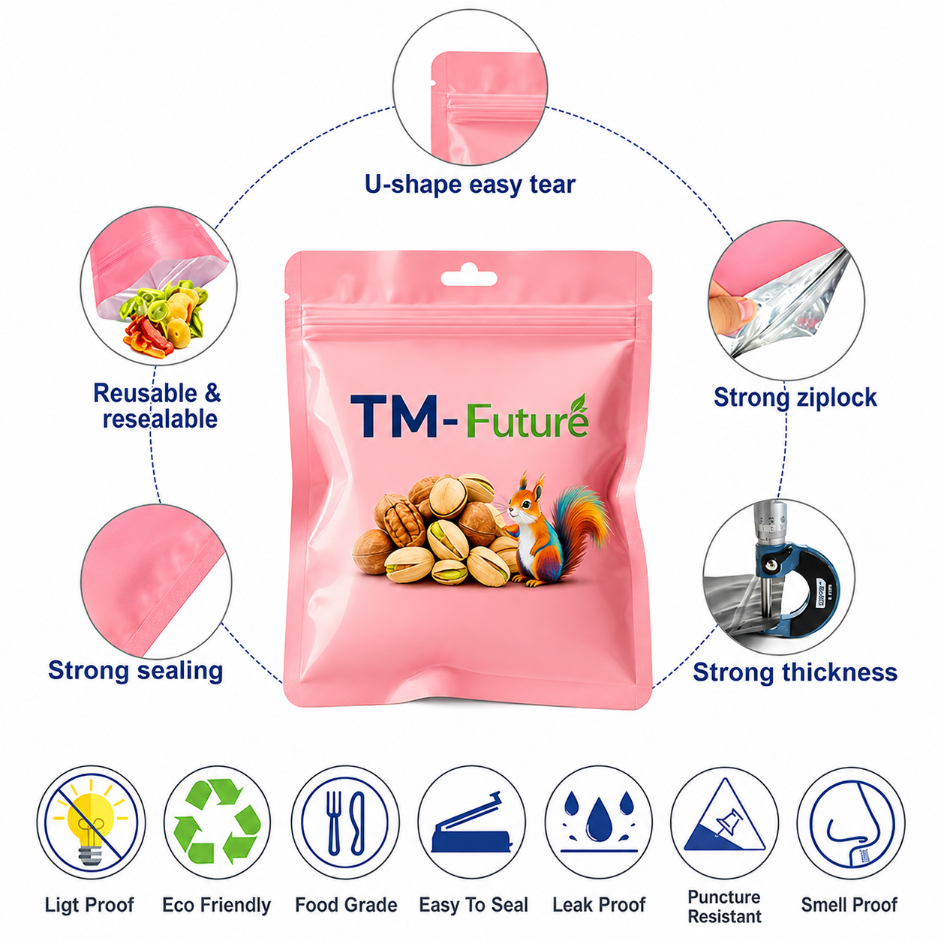
Barrier performance helps protect the product from oxygen, moisture, light, aroma loss, or external contamination. Different products need different barrier levels.
Coffee usually needs high-barrier materials to help protect aroma and freshness.
Snacks, nuts, granola, and dried fruit often need moisture protection and reliable sealing.
Pet food and cat litter bags need stronger materials because of heavier filling weight and shipping pressure.
Liquid products need secure sealing and suitable film structures to prevent leakage.
Frozen food packaging should handle cold-chain storage and transportation conditions.
This is why one pouch material cannot fit every product. The right structure should match the product inside.
How Material Structure Affects Printing
Material choice also affects how your custom printed pouch looks. Matte finish, glossy finish, kraft paper look, soft-touch surface, transparent window, and metallic effects can all create different brand impressions.
For retail products, packaging is often the first thing customers see. A suitable material and finish can help the product look more premium, natural, colorful, or clean depending on the brand style.
Sealing Strength and Functional Features
Material structure also affects sealing performance. Strong sealing is important for products that need freshness protection, heavier fills, repeated handling, or long-distance shipping.
Custom flexible packaging can also include useful features such as:
Resealable zipper
Tear notch
Clear window
Hang hole
Degassing valve
Spout
Handle
Flat bottom structure
Side gusset
Matte or glossy finish
These features should be selected based on product use, filling method, shelf display, and customer convenience.
How to Choose the Right Material
Before choosing a pouch material, it is helpful to confirm several details:
Product type
Filling weight
Pouch size
Shelf-life requirement
Storage condition
Packing method
Printing design
Target market
MOQ requirement
Shipping method
With these details, a packaging supplier can recommend a more practical material structure instead of guessing.
How TM-Future Can Help
TM-Future helps brands choose suitable custom flexible packaging materials for coffee bags, snack pouches, pet food bags, cat litter bags, spout pouches, flat bottom pouches, and other retail-ready products.
We support low MOQ digital printing, custom printed pouches, material structure recommendations, zipper options, valve options, clear windows, surface finishes, and practical packaging advice for growing brands.
If you are not sure which material structure is right for your product, send us your product details, filling weight, pouch size, and packaging goals. Our team will help recommend a suitable custom pouch solution for sampling or bulk production.