
2026-03-14T09:00:00.000Z
How to Choose the Right Custom Pouch for Your Product
Learn how to choose the right custom pouch style for snacks, coffee, pet food, powders, liquids, frozen food, and beauty products based on product type, filling weight, MOQ, and packaging needs.
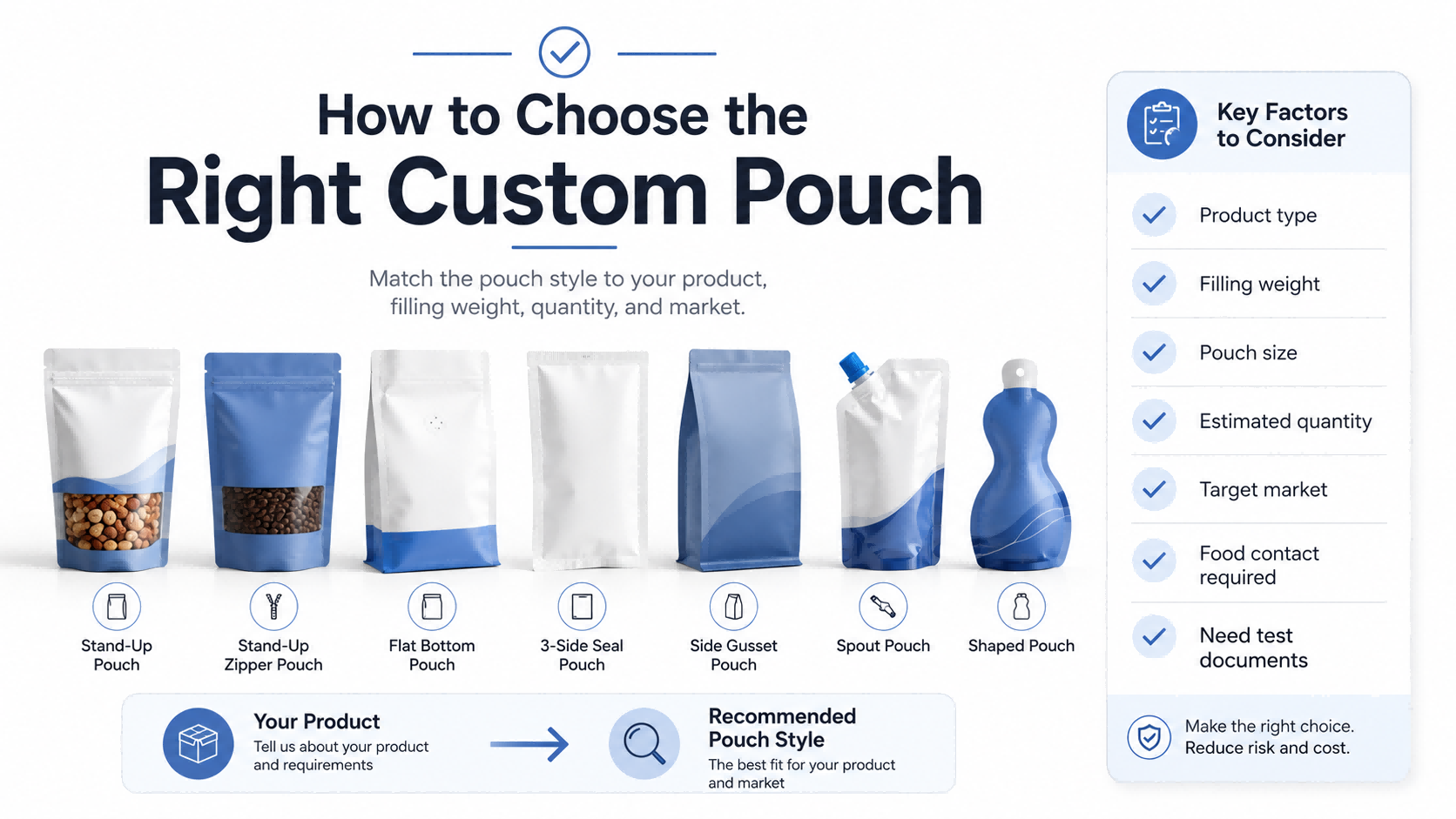
How to Choose the Right Custom Pouch for Your Product
When you start looking for custom pouches online, many options look similar at first.
Stand-up pouches.
Flat bottom pouches.
3-side seal pouches.
Side gusset bags.
Zipper bags.
Shaped pouches.
Spout pouches.
Back seal bags.
Every supplier says their pouch is suitable. Every product photo looks clean. Every bag seems customizable.
But if you are a brand owner, buyer, product manager, or startup founder, the real question is usually not:
Which pouch style looks good?
The better question is:
Which pouch style fits my product, filling weight, sales channel, budget, and customer experience?
Choosing the wrong pouch style may not look like a big problem at the beginning. But after filling, shipping, shelf display, or customer use, the issues can become obvious: poor standing effect, weak sealing, difficult filling, too much unused space, bad shelf presentation, high MOQ, or unnecessary material cost.
This guide will help you understand how to choose a practical custom pouch style based on your real product needs.
Start With the Product, Not the Pouch Picture
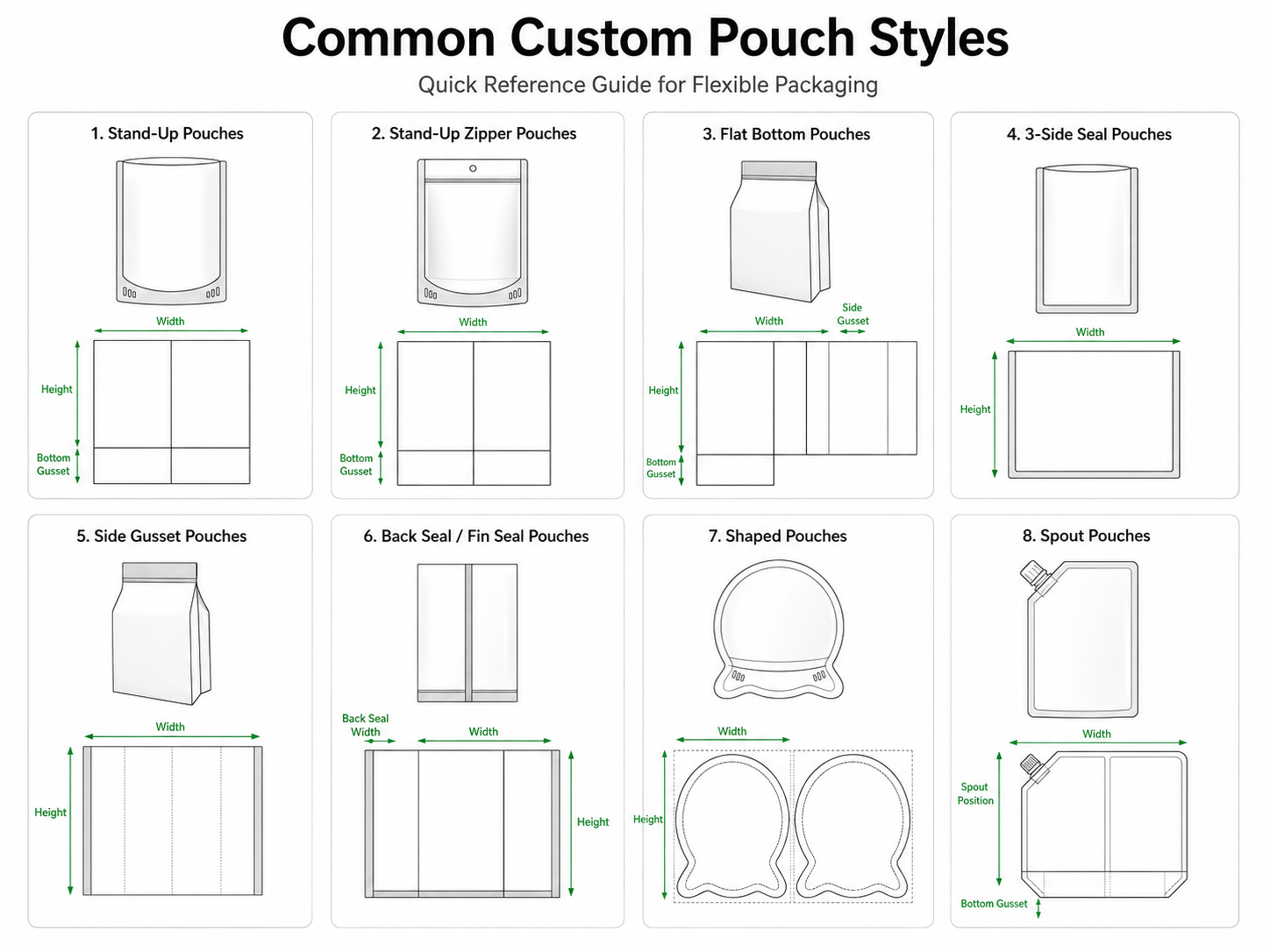
Many buyers begin by sending a pouch photo and asking:
Can you make this bag?
Yes, most custom pouch suppliers can make similar bag types. But that does not mean the same pouch is the best option for your product.
Before choosing a bag style, it is better to confirm a few basic details:
What product will be packed?
How many grams or milliliters per bag?
Is it dry, oily, liquid, powder, frozen, or granular?
Does it need to stand on shelves?
Will it be shipped by courier or pallet?
Does it need a zipper, valve, spout, handle, or window?
Is it direct food contact?
Which country will the product be sold in?
Do you need food-contact documents or testing support?
What is your estimated order quantity?
These questions help narrow down the pouch style quickly.
A coffee bag, a cat litter bag, a cosmetic sample sachet, a frozen vegetable pouch, and a liquid refill pouch may all be “flexible packaging,” but their structures should not be chosen the same way.
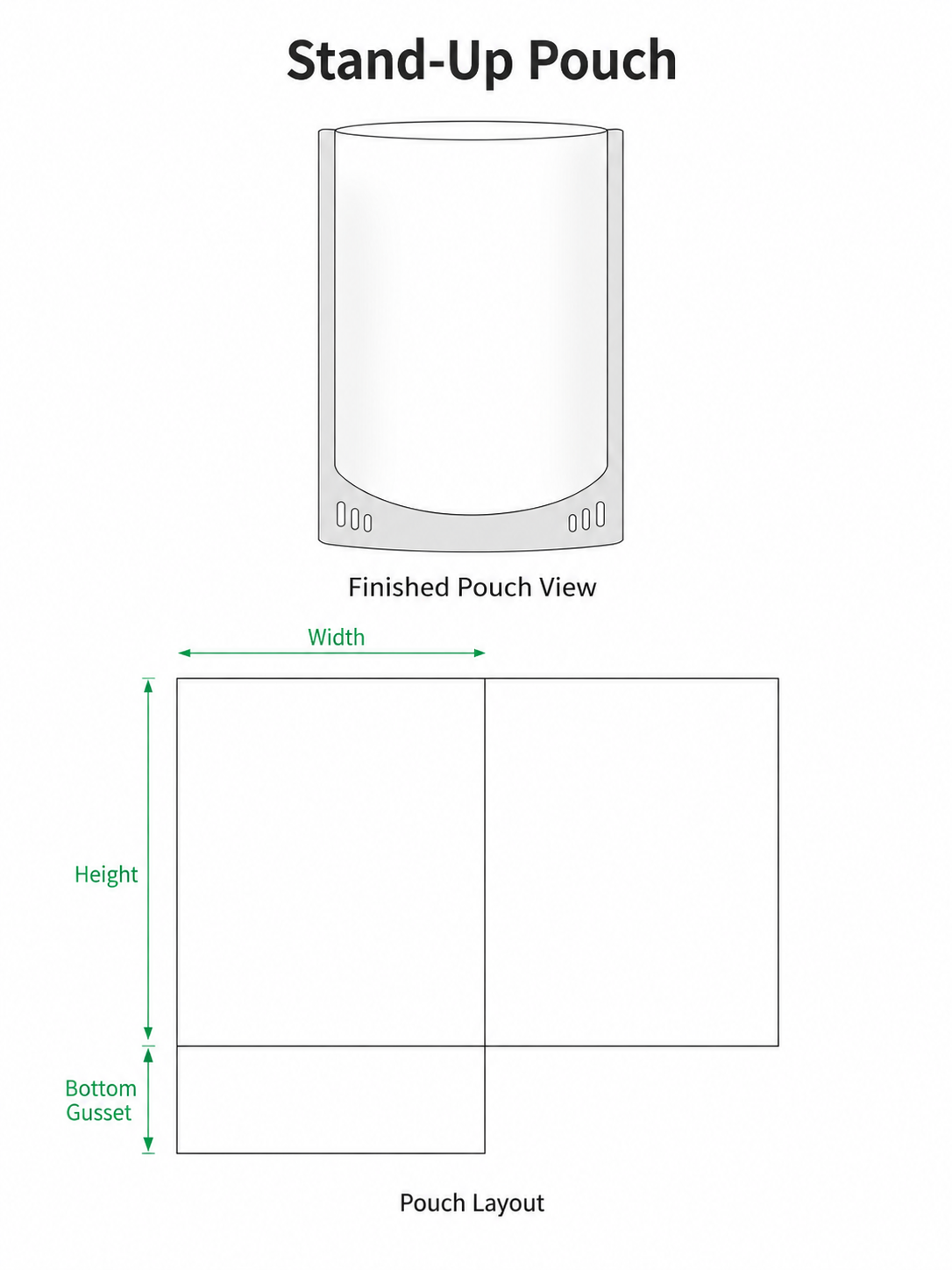
1. Stand-Up Pouches: A Practical Choice for Many Consumer Products
Stand-up pouches are one of the most common flexible packaging styles.
They are widely used for snacks, nuts, dried fruit, candy, granola, pet treats, powders, supplements, frozen food, and many retail products.
The main advantage is simple: they can stand upright and display well.
For brands selling through retail shelves, online stores, farmers markets, specialty shops, or product photos, stand-up pouches give the package a clean and stable presentation.
They can also be combined with:
Zipper closure
Tear notch
Clear window
Matte or glossy finish
Hang hole
Rounded corners
High-barrier materials
Stand-up pouches are usually a good choice when you want a balance of appearance, function, and cost.
They are especially suitable when the product is not extremely heavy and the brand needs a retail-ready look.
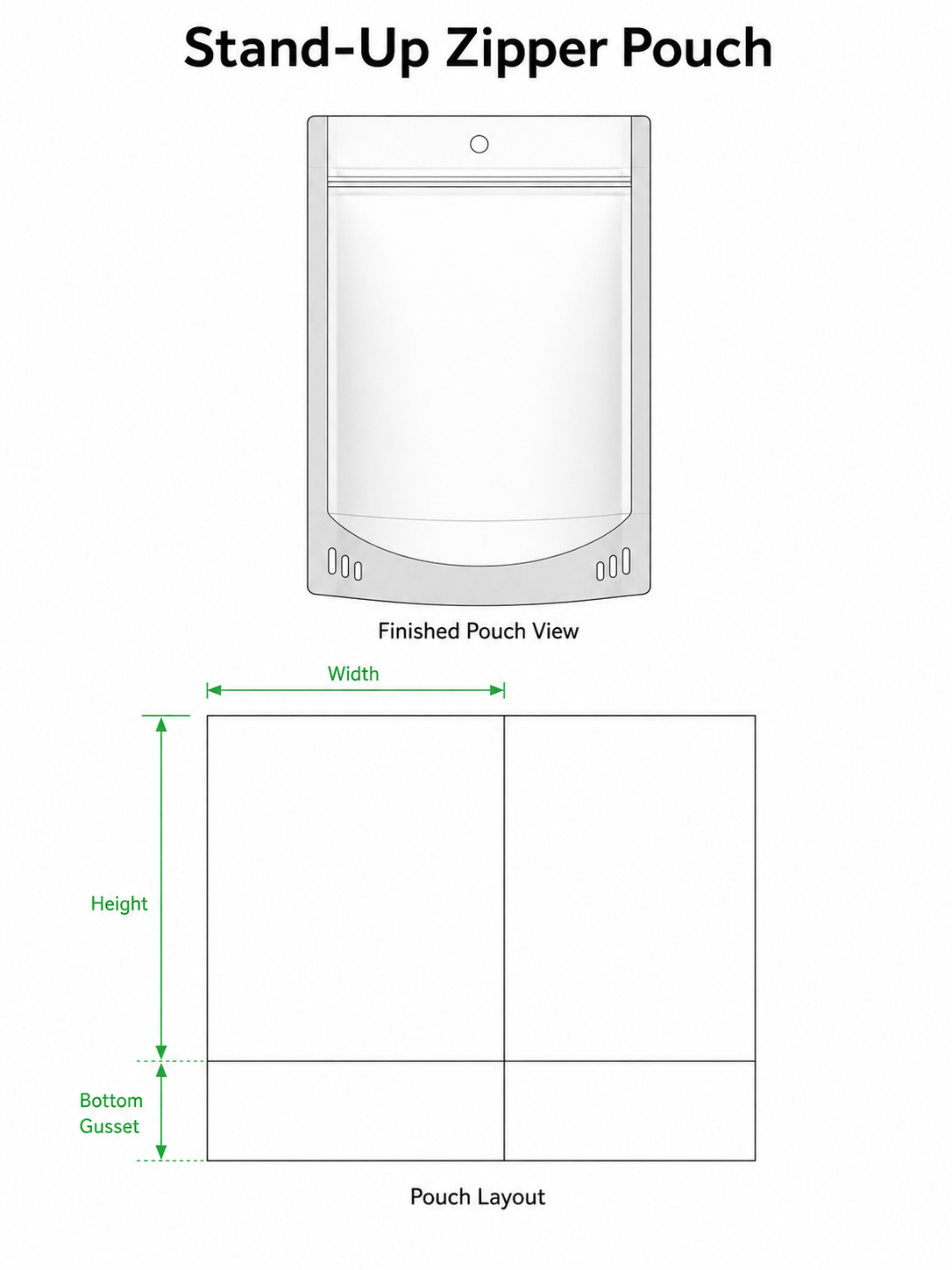
2. Stand-Up Zipper Pouches: Better for Reusable Packaging
If the customer will open and close the package many times, a zipper becomes very important.
Stand-up zipper pouches are commonly used for:
Snacks
Coffee
Tea
Pet treats
Dried fruit
Nuts
Powders
Supplements
Candy
Bakery products
The zipper helps improve the user experience after opening. It also makes the package feel more practical and premium.
For example, a customer buying 250g of coffee beans or 150g of dried fruit may not finish the product in one use. A zipper pouch makes storage easier and helps protect freshness after opening.
This pouch style is a good option when your product needs both shelf display and resealability.
3. Flat Bottom Pouches: Premium Look and Better Stability
Flat bottom pouches, also called box pouches or 8-side seal pouches, are often used for coffee, tea, pet food, granola, nuts, protein powder, and premium dry food products.
Compared with regular stand-up pouches, flat bottom pouches usually look more structured. They have a stable base, flat front and back panels, and side panels that can carry additional branding or product information.
This makes them especially useful for brands that care about shelf presence.
Flat bottom pouches are often chosen when the buyer wants:
A premium retail look
Better standing stability
More branding space
A box-like pouch shape
Higher filling volume
Strong product presentation
For coffee brands, flat bottom pouches are very common because they work well with one-way degassing valves, matte finishes, side gussets, and high-barrier structures.
For pet food and heavier dry products, the final material thickness should be selected carefully based on filling weight and shipping conditions.
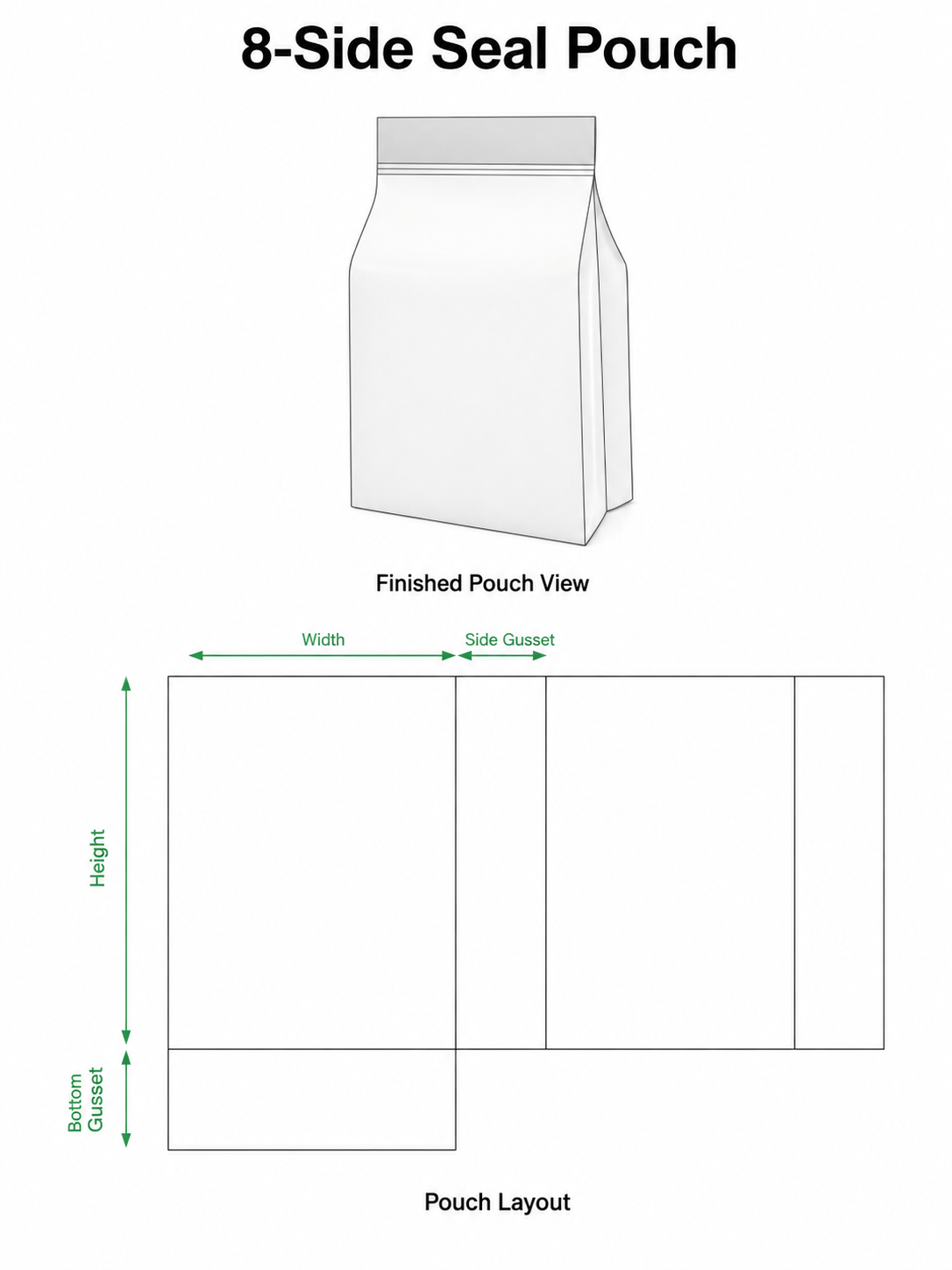
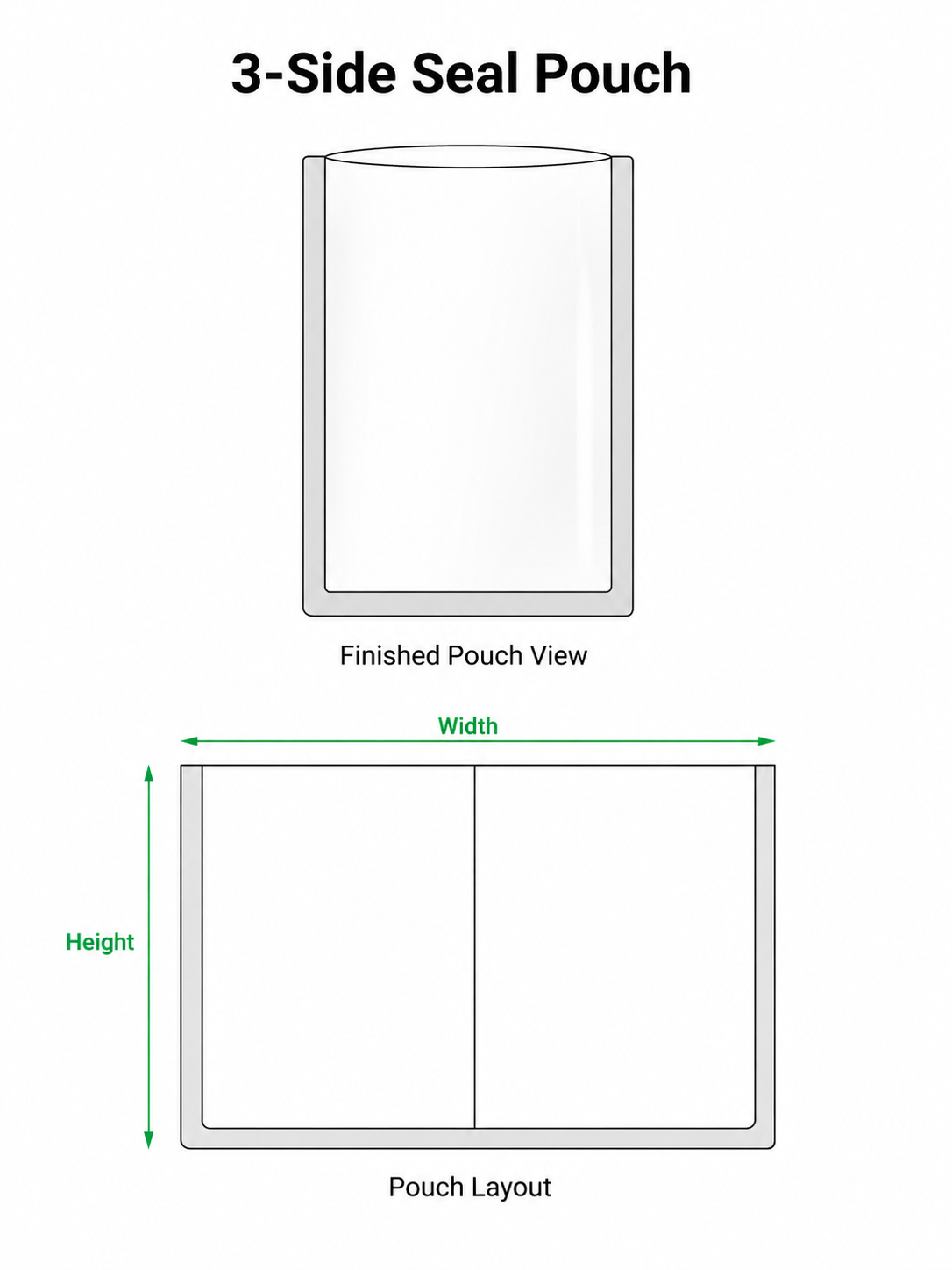
4. 3-Side Seal Pouches: Simple, Flat, and Cost-Effective
3-side seal pouches are flat pouches sealed on three sides, usually with one open side for filling before final sealing.
They are commonly used for:
Sample packs
Single-use products
Powder sachets
Seasoning packs
Tea samples
Coffee samples
Cosmetic masks
Medical or hygiene products
Small food portions
This pouch style is practical when the product does not need to stand by itself.
It is often more suitable for lightweight products, trial packs, inner packaging, or sample distribution.
For brands launching a new product, 3-side seal pouches can be a useful way to test samples before moving to larger retail packaging.
They are also suitable when packing efficiency, low material usage, and simple presentation matter more than shelf standing.
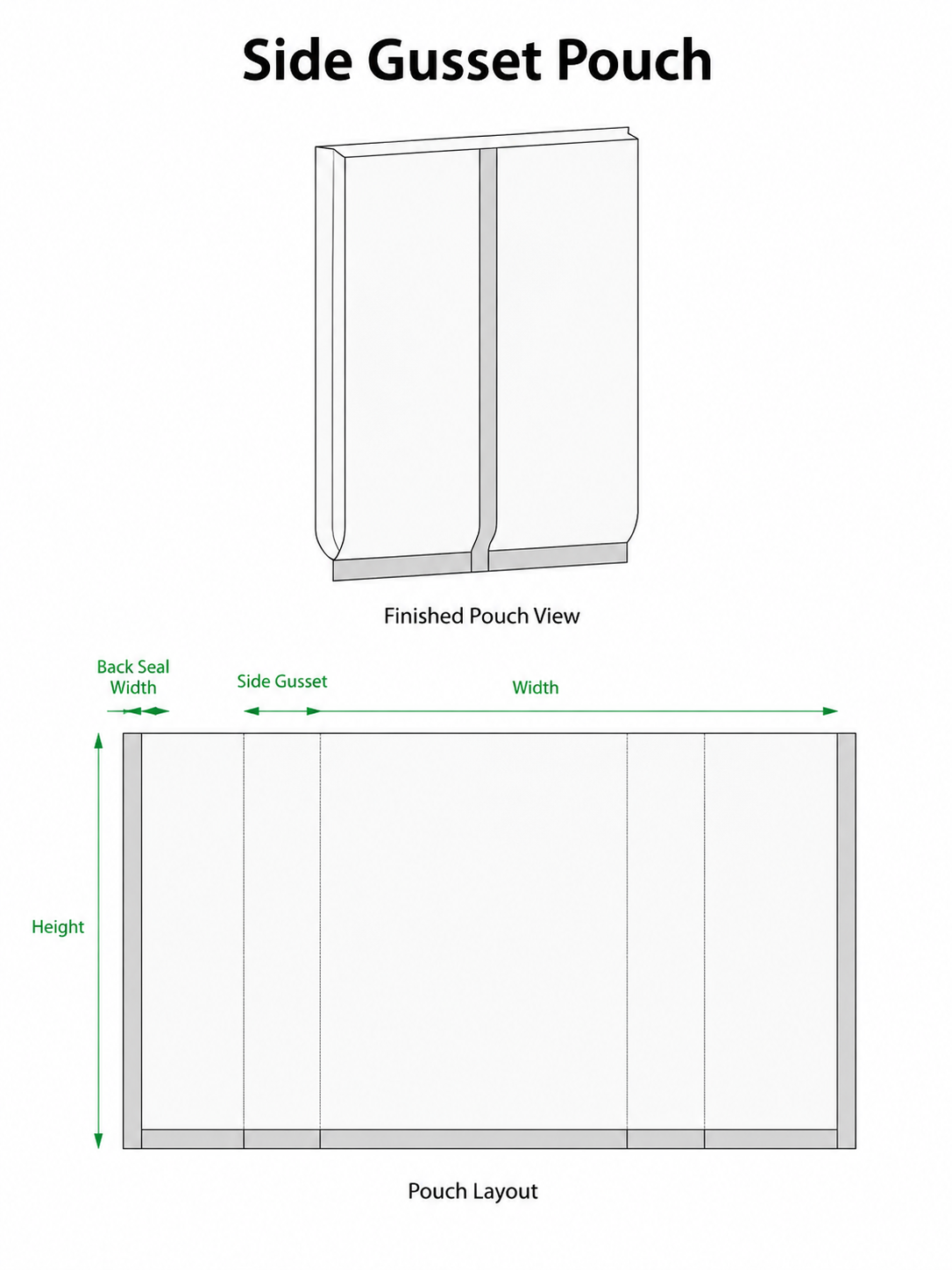
5. Side Gusset Pouches: Good for Coffee, Tea, and Larger Dry Goods
Side gusset pouches expand from both sides, allowing more filling volume while keeping the front panel relatively clean.
They are commonly used for:
Coffee beans
Tea
Powders
Pet food
Dry food
Grains
Rice
Bakery ingredients
This style works well when the product needs more volume but does not require a flat bottom box-like structure.
Side gusset bags are especially common in coffee and tea packaging. They can be paired with one-way degassing valves, tin ties, heat sealing, or high-barrier materials.
For brands that want a traditional coffee bag appearance with good capacity, side gusset pouches can be a practical choice.
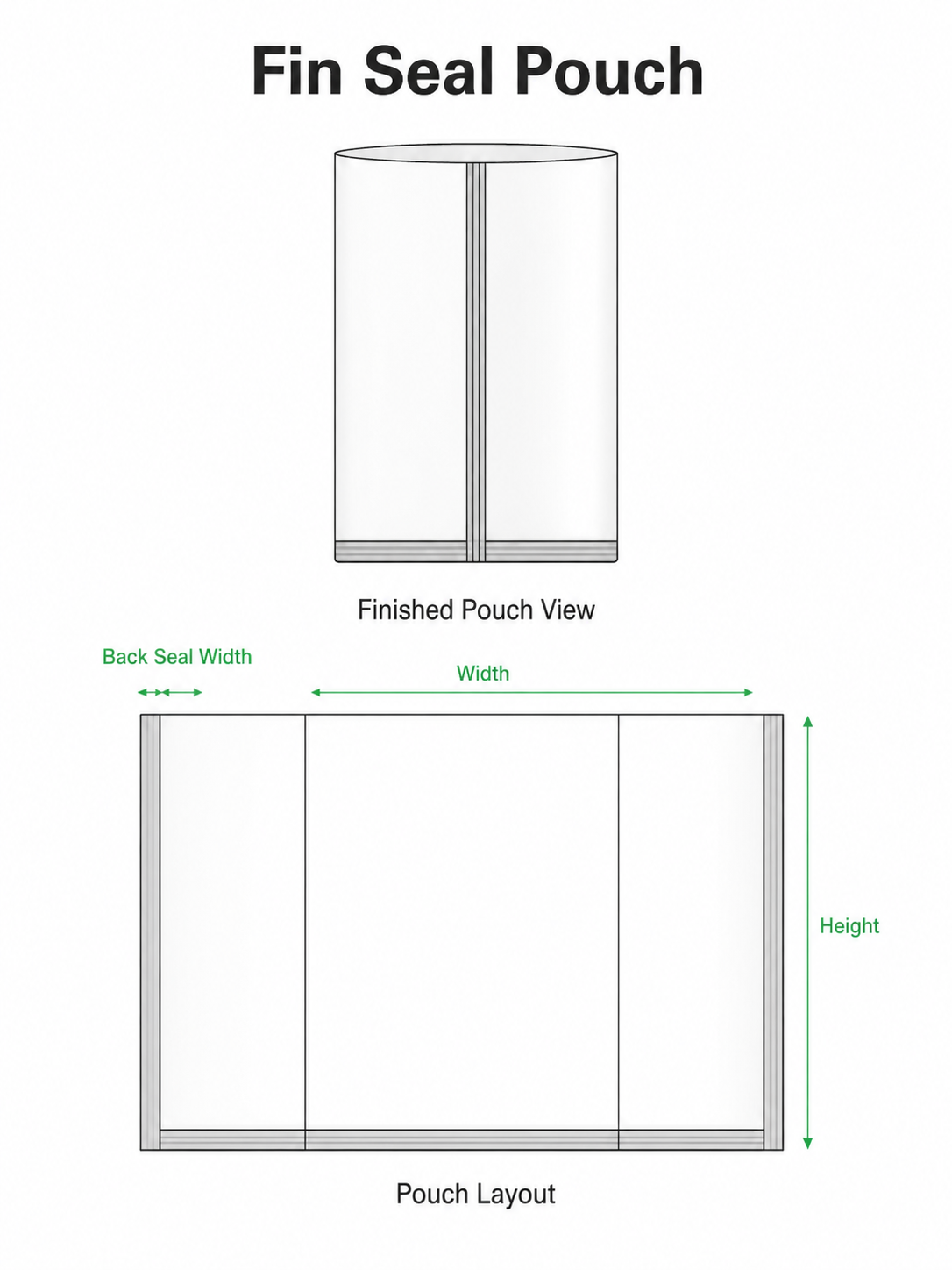
6. Back Seal / Fin Seal Pouches: Efficient for Automated Packing
Back seal pouches are commonly used in high-speed production and automatic packing lines.
They are often seen in:
Snacks
Biscuits
Candy
Frozen food
Instant food
Powder packs
Small retail food products
This pouch type can be efficient for machine packing and mass production.
For brands using automated filling equipment, the pouch structure must match the machine requirements, film roll direction, sealing width, and packaging speed.
This is not usually the first choice for very small custom orders, but it can be suitable for mature products with stable production volume.
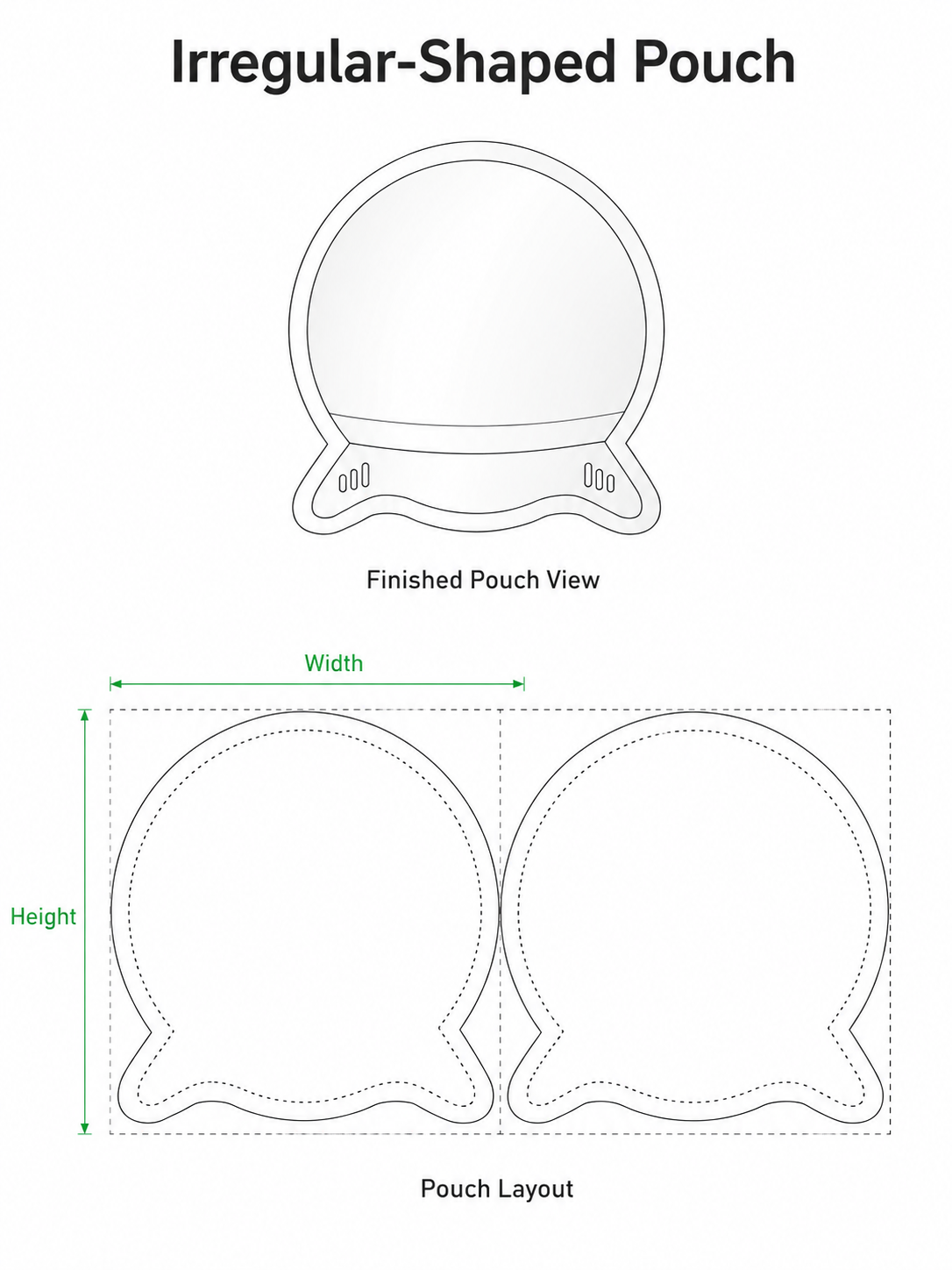
7. Shaped Pouches: Good for Brand Differentiation
Shaped pouches are custom-cut packaging bags designed to match the product, brand concept, or shelf display idea.
They are often used for:
Candy
Kids snacks
Pet treats
Beverages
Cosmetic samples
Promotional products
Gift packaging
The main advantage is visual differentiation.
A shaped pouch can make the product easier to notice, especially in competitive retail categories.
But shaped pouches should be planned carefully. The shape may affect filling, sealing, material waste, MOQ, and production cost.
This style is best when branding impact matters and the budget allows extra customization.
8. Spout Pouches: Best for Liquids and Refills
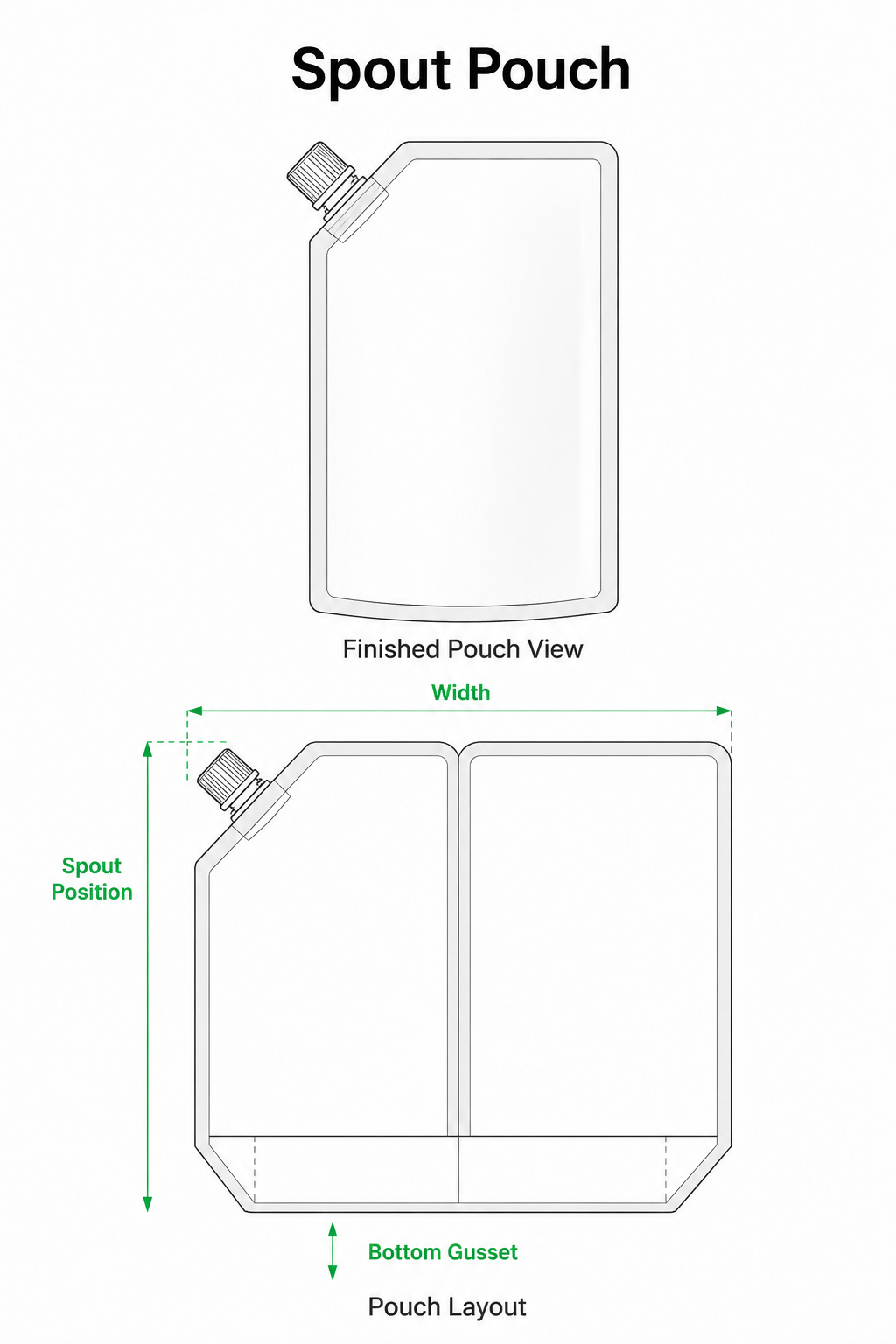
Spout pouches are designed for liquid, semi-liquid, and refill products.
They are commonly used for:
Sauces
Juice
Baby food
Yogurt
Liquid soap
Shampoo
Detergent refills
Skincare refills
Household products
The spout makes pouring, dispensing, and resealing easier.
For liquid packaging, material structure and sealing performance are especially important. The pouch must support product weight, liquid pressure, transport handling, and leak prevention.
Spout size, cap type, pouch shape, filling method, and product viscosity should all be confirmed before production.
How Experienced Buyers Usually Think
Experienced buyers usually do not choose a pouch only from appearance.
They think in a more practical way:
Will this pouch run on my filling line?
Will the material protect my product long enough?
Will the MOQ fit my launch plan?
Can I test multiple SKUs before scaling?
Can the bag survive e-commerce shipping?
Will customers find it easy to open, close, carry, or pour?
Will the packaging look right compared with competitors?
A product manager may care about launch speed and SKU testing.
A purchasing manager may care about cost, MOQ, and supplier reliability.
A brand owner may care about appearance, shelf impact, and customer experience.
A technical team may care about material structure, sealing, and compliance documents.
The right pouch should balance all these needs.
How New Buyers Can Make the Process Easier
If you are new to custom flexible packaging, you do not need to know every pouch structure before contacting a supplier.
A good starting point is to prepare this information:
✅Product type
✅Filling weight or volume
✅Product form: dry, liquid, powder, frozen, oily, or granular
✅Expected pouch size
✅Estimated order quantity
✅Target market or country
✅Retail channel: e-commerce, supermarket, specialty store, or wholesale
✅Need for zipper, valve, spout, handle, or window
✅Artwork status
✅Food-contact or testing document needs
With this information, a packaging supplier can recommend a more suitable pouch style instead of guessing.
This saves time, avoids repeated revisions, and reduces the chance of ordering the wrong bag.
Practical Examples
A snack brand with 100g mixed nuts may choose a stand-up zipper pouch with a clear window and moisture barrier structure.
A cosmetic brand testing sample masks may choose a 3-side seal pouch because it is flat, simple, and suitable for single-use packing.
A pet food brand packing 2kg dry food may need a thicker flat bottom pouch or side gusset pouch with stronger sealing.
A household care brand selling liquid refills may need a spout pouch with strong heat sealing and suitable liquid-compatible material.
The best pouch depends on the product situation, not only the product category.
How TM-Future Helps You Choose the Right Pouch
TM-Future supports custom pouch packaging for food, coffee, tea, snacks, pet products, frozen food, powders, liquids, beauty care, and refill products.
We help review your product type, filling weight, pouch size, quantity, target market, artwork status, and functional needs before recommending a suitable pouch style.
For low MOQ projects, digital printing may help new brands test designs, multiple SKUs, or seasonal packaging with lower upfront risk.
For larger repeat orders, gravure printing may offer better unit cost and stable production for mature products.
For food-contact packaging projects, available supplier material documents may be provided based on the selected structure. If specific third-party testing is required, it can be coordinated after the final material structure, product use, and destination market are confirmed.
Our goal is not to push one pouch type.
Our goal is to help you choose a practical packaging solution that fits your product stage, budget, and market needs.
Final Thought
Choosing a custom pouch is not just a design decision.
It affects product protection, filling, transport, shelf display, customer experience, MOQ, and long-term cost.
Before ordering custom packaging, do not only ask:
Can you make this bag?
Ask:
Is this the right pouch for my product?
That question can save time, reduce risk, and help your packaging work better from the first order.