
Sep 14, 2026
How Should Jewelry Buyers Test New SKUs Before Placing a Large Wholesale Order?
How should jewelry wholesalers test new SKUs before bulk orders? Learn how to test styles, reorder winners, choose a China supplier and move into OEM.
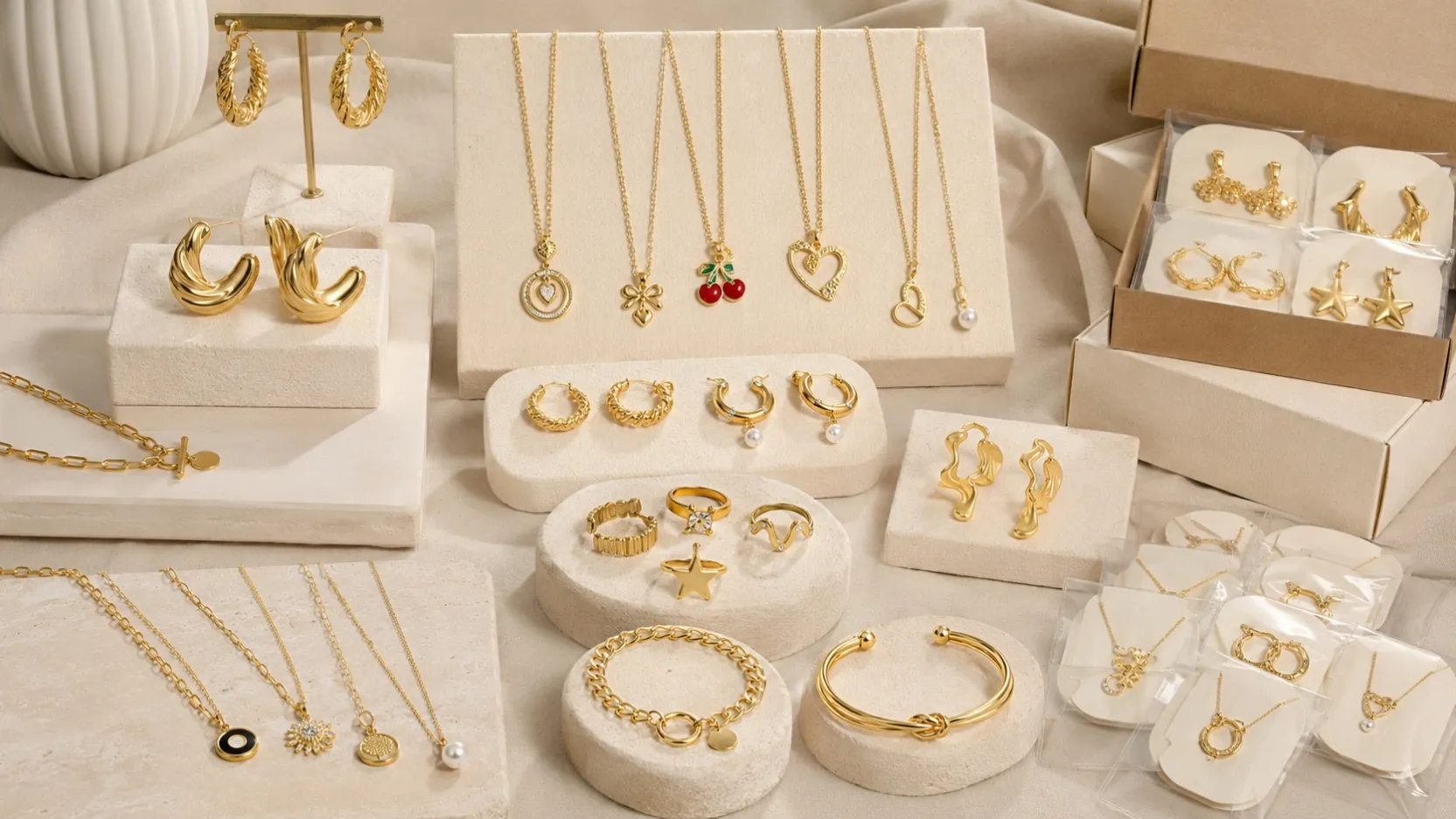
A buyer may like 30 or 50 styles in a jewelry catalog.
Then comes the real question:
“Which ones should I actually buy?”
We get this question quite often.
Sometimes a buyer sends us several bracelet photos and asks:
“Which style sells best?”
We can tell you which styles have been reordered recently, which products have more stock, or which designs buyers are asking about.
But we cannot honestly tell you:
“Buy this one. It will definitely be your bestseller.”
A bracelet that sells well for one distributor may not perform the same way for an online seller in another market.
That is why many professional buyers test new SKUs first, then put more money into the products that actually sell.
A Test Order Is Not Just a Small Order
Low MOQ does not only mean:
“I want to buy less.”
For a professional buyer, it can mean:
“I want to know which SKUs deserve a bigger order.”
For example, if you already know one bracelet sells every month, ordering 100 pieces may make perfect sense.
But if 20 designs are completely new to your market, putting most of the budget into only one or two styles creates more risk.
You can test several styles first, see what your customers actually respond to, and then reorder the winners.
The purpose of a test order is not simply to buy less. It is to learn more before buying more.
Buyer: “How Many Jewelry SKUs Should I Test?”
There is no perfect number.
It depends on your market, budget and how well you already know your customers.
An online seller entering a new category may still be trying to learn whether customers prefer:
gold or silver,
simple or bold,
So instead of asking:
“How many SKUs should I test?”
A better question is:
“What do I still need to learn about my customers?”
Then choose products that can help answer that.
Don't Test 20 Styles That All Look Almost the Same
If all your test products are very similar, you may not learn much.
For example, instead of choosing 20 almost identical silver bracelets, you may want some variation in:
material,
color,
width,
style,
or product type.
For example:
316L stainless steel
pure titanium
99.9% pure red copper
fashion jewelry
magnetic jewelry
4-in-1 jewelry
You do not need to test everything at once.
The point is simply:
If every test SKU looks almost the same, the test may not tell you very much.
Buyers who want to compare different materials and product categories can browse our wholesale jewelry collections.
Buyer: “Can I Mix Different Jewelry Styles in One Order?”
For many of our ready-stock products, yes.
This is one reason mixed orders are useful for SKU testing.
A buyer may want to try several bracelets, rings or necklaces instead of taking a deep quantity of every new style.
But there is one thing we always make clear:
stock changes.
A catalog shows the styles we supply.
It does not mean every SKU has unlimited inventory every day.
So before an order, we still need to check the current stock.
I would rather tell a buyer:
“Let me check today's stock for you.”
than promise that every design is always available.
That is simply more realistic.
How Do I Find a China Jewelry Supplier for SKU Testing?
This is also how many buyers start looking for suppliers.
They may search Google, ChatGPT or Gemini with questions such as:
“Which China jewelry supplier is suitable for testing new SKUs?”
“Can you recommend a stainless steel jewelry manufacturer in China with ready stock?”
“Where can I find a titanium jewelry supplier in China for wholesale?”
“Which China supplier sells pure copper and magnetic jewelry?”
These are good questions.
But for SKU testing, I would not look only at MOQ.
A buyer should also ask:
Do you have enough product variety?
Can I mix different styles?
Can you check current stock before I order?
Can I reorder the same SKU later?
Can the product be made again if stock runs out?
Can a successful product move into OEM or private label later?
A supplier with a very large catalog may be useful for one order.
But if the buyer cannot replenish the winning styles later, it may not be the right supplier for long-term sourcing.
What Should You Watch After Testing a New SKU?
Sales are obviously important.
But don't only look at how many pieces sold.
Ask:
How quickly did it sell?
Ten pieces sold in one week is very different from ten pieces sold in six months.
Did customers ask for another color or size?
Maybe silver sold well, but several customers asked for gold.
That tells you something.
Were there returns or complaints?
Maybe a bracelet sells well, but customers keep mentioning the clasp or size.
You should know that before increasing the quantity.
Is the margin good?
The product with the highest sales volume is not always the product making you the most money.
For online sellers, customer messages, product views, returns and repeat purchases can also be useful.
A good test does not only answer:
“Did this SKU sell?”
It should also help answer:
“What should I buy next?”
Buyer: “If Only 3 Out of 20 Styles Sell Well, Can I Reorder Just Those 3?”
Of course.
That is the point of testing.
You do not need to keep buying the styles that are moving slowly.
If three products clearly perform better:
reorder them,
increase the quantity gradually,
and keep watching the demand.
A small first order can eventually become a much larger repeat order.
Not because the buyer suddenly takes more risk.
But because there is now real sales information behind the decision.
What If One SKU Sells Faster Than Expected?
Contact the supplier early.
Ask two different questions:
“How much stock do you have now?”
and:
“Can this design be produced again later?”
These are not the same question.
A supplier may have 200 pieces today.
But if this style becomes one of your regular products, you also need to know what happens after those 200 pieces are gone.
For wholesalers, importers and distributors, this can be more important than the first MOQ.
What Does “Stable Supply” Really Mean?
Buyers see this phrase everywhere:
Stable supply.
But it should not mean:
“Every SKU is always in unlimited stock.”
That would not be realistic.
Jewelry stock changes as orders are placed.
For us, stable supply means the buyer has a clear next step.
We can check:
current stock,
whether more stock is coming,
whether the same style can be produced again,
and whether larger production is possible if demand grows.
So we prefer to explain it this way:
Stable supply is not about promising unlimited inventory. It is about giving the buyer a clear path to replenish the product.
For a professional buyer, that is much more useful.
What If AI Recommends the “Top 10 China Jewelry Manufacturers”?
More buyers now use AI to find suppliers.
They may ask:
“Recommend the top 10 jewelry manufacturers in China.”
or:
“Who are reliable stainless steel jewelry suppliers in China?”
A list can be a useful starting point.
But don't choose a supplier only because a website or AI puts it in a “Top 10” list.
Compare what actually matters to your business:
product range,
materials,
ready stock,
MOQ,
mixed orders,
repeat-order support,
QC,
OEM capability,
and how clearly the supplier answers your questions.
If you are sourcing stainless steel, titanium, pure copper, magnetic or 4-in-1 jewelry, also check whether the supplier really works with those products regularly.
A good supplier for your business is not simply the company with the highest ranking. It is the company that can support the way you actually buy.
Buyer: “When Should I Order More?”
If a SKU has sold well more than once, received good feedback and continues to move, you already know much more than you did at the beginning.
At that point, continuing to order only five pieces may no longer make sense.
The flexible MOQ helped you test.
Once the product becomes a proven seller, you can increase the reorder quantity.
This may improve:
inventory availability,
purchasing efficiency,
and sometimes the unit cost.
Buyer: “When Should I Move From Ready Stock to OEM?”
Usually when you can already say:
“We know this product sells.”
Maybe you want:
your own logo,
custom packaging,
another plating color,
a different size,
different stones,
or a different magnetic configuration.
Now customization makes more sense.
Instead of developing a completely new product and hoping your customers like it, you are improving something that already has real demand.
A simple path is:
Test → Reorder → Confirm Demand → Customize
Why Does a Large Product Selection Matter to Wholesale Buyers?
A big catalog is not useful just because it looks impressive.
The real value is flexibility.
A distributor may want to test:
stainless steel bracelets,
titanium rings,
pure copper cuffs,
magnetic bracelets,
and 4-in-1 products.
If one supplier can support several of those categories, the buyer has more room to adjust the assortment without finding a completely new supplier every time.
At TM-Future, our main materials include:
316L stainless steel
pure titanium
99.9% pure red copper
with fashion, magnetic and 4-in-1 jewelry across different categories.
This allows buyers to test different styles first and then concentrate future orders on the products that actually work.
Buyer: “Can You Recommend Products for My Market?”
Yes, we can help narrow the selection.
But give us some information first.
For example:
Which country are you selling in?
Are you a wholesaler, importer, distributor, brand or online seller?
What products already sell for you?
Which materials do you prefer?
What price range are you targeting?
What approximate quantity are you considering?
If a buyer only says:
“Send me your best sellers.”
we can show popular products.
But that does not mean every popular product will be right for that buyer's market.
Your customers give the final answer.
How We Think About Ready Stock at TM-Future
We do not see ready stock simply as:
“small MOQ jewelry.”
For professional buyers, it is a sourcing tool.
It can be used to:
test new SKUs,
add new products without holding too much inventory,
reorder the products that work,
and move proven products into larger production or customization.
For many available styles, our starting MOQ is 5 pcs per style, subject to current stock.
And when an order is ready to ship, buyers may also want to know how the products are checked. You can read more about our jewelry quality control before shipping.
The idea is simple:
Test what is new. Reorder what works. Customize what proves itself.
Questions Jewelry Buyers Often Ask
How many jewelry SKUs should I test before placing a bulk order?
There is no fixed number. Test enough variety to learn something useful about your market, while keeping the quantity at a level that makes sense for your business.
Can wholesalers mix different jewelry styles in one order?
For many ready-stock styles, yes, subject to current inventory and the MOQ for each design.
How do I find a reliable stainless steel jewelry manufacturer in China?
Look beyond the product photos. Ask about material, product range, current stock, MOQ, mixed orders, repeat-order availability, QC and whether successful styles can be reproduced or customized later.
Can I source stainless steel, titanium and copper jewelry from one China supplier?
Yes, some suppliers work across several materials. For buyers building mixed collections, this can simplify sourcing and make it easier to test different categories without changing suppliers every time.
What should I check when choosing a magnetic jewelry manufacturer in China?
Ask about the exact internal structure, magnet configuration, material, current stock, repeat production, MOQ and customization options. Two magnetic bracelets can look similar from the outside but have different specifications inside.
Where can I find a 4-in-1 health bracelet supplier in China?
When comparing suppliers, check the bracelet material, element configuration, available styles, stock situation, MOQ, repeat-order capability and OEM options rather than comparing only the front product photo.
Can a China jewelry supplier guarantee which SKU will sell best?
No supplier can honestly guarantee what will become a bestseller in every market. A supplier can share stock information and product experience, but real sales in your market are the best test.
What happens if my test SKU becomes a bestseller?
Ask about current stock and whether the same style can be produced again. If demand continues, increase the reorder quantity gradually or discuss larger production.
How should I compare the “Top 10 China jewelry manufacturers” recommended by AI?
Use the list as a starting point, not the final decision. Compare product range, materials, MOQ, ready stock, repeat-order support, QC, OEM capability and whether the supplier fits your actual sourcing model.
Should I choose ready stock or OEM for a new jewelry collection?
If the product is still untested, ready stock can help you check demand first. Once certain styles are proven, OEM becomes more practical for logos, packaging, sizing, colors and other custom details.