
Jun 26, 2026
Custom Stick Sachet Packaging for Drink Powder: A Real First-Run Inquiry
A real packaging inquiry about 3–5g drink powder stick sachets, folding carton boxes, moisture barrier materials, hand filling, and first-run shipping concerns.
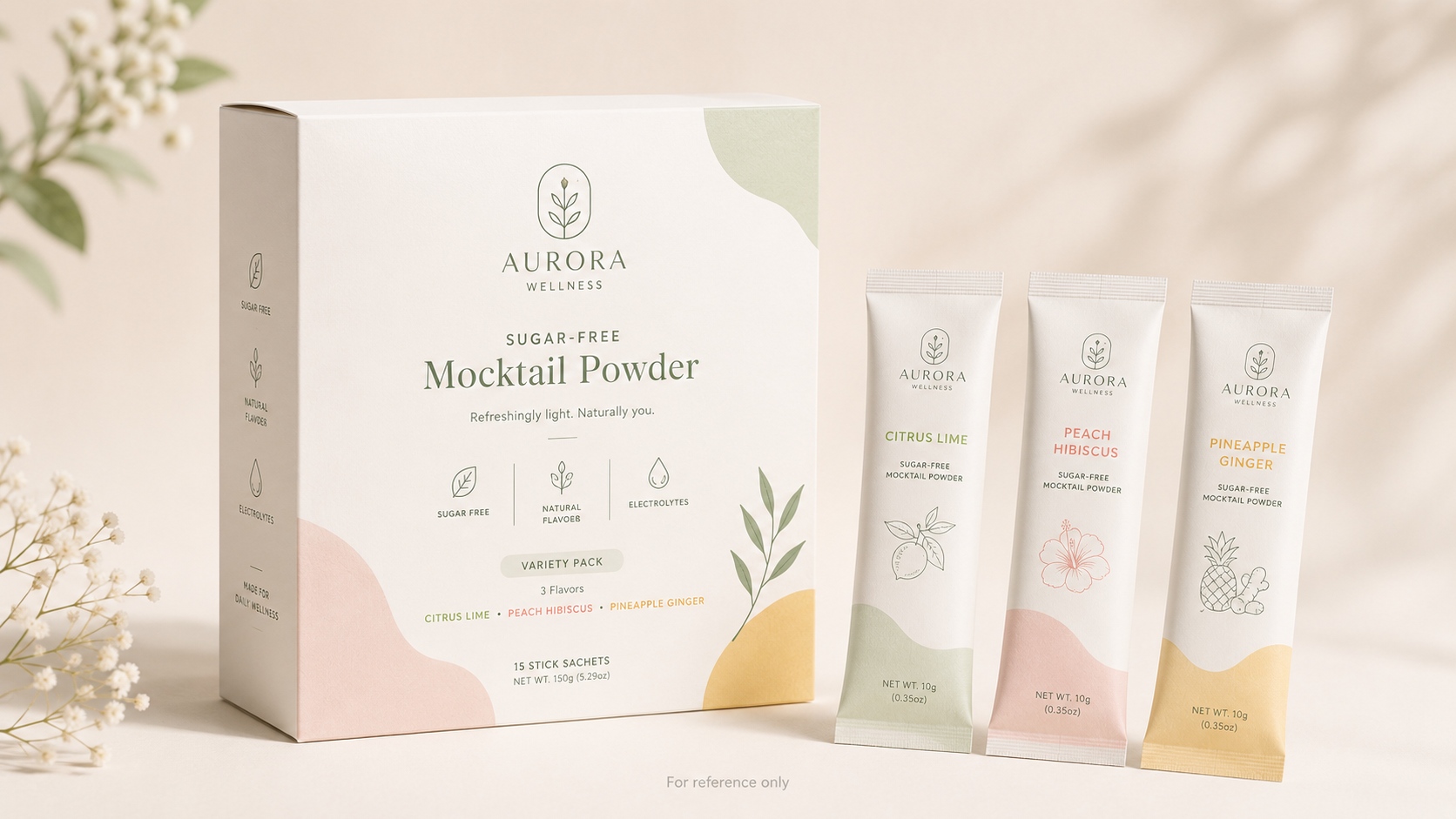
Recently, we received an inquiry from a startup drink brand preparing a first launch for a sugar-free drink powder product.
At first, the request looked quite simple:
3–5g powder per stick sachet
6 stick sachets per retail pack
Matte, clean, minimalist packaging style
Online-first launch, but still retail-ready
But during the discussion, the real packaging questions became much more practical.
This was not only about making a small sachet. It was about finding a packaging setup that could work for hand filling, first market testing, brand presentation, shipping, and cost control.
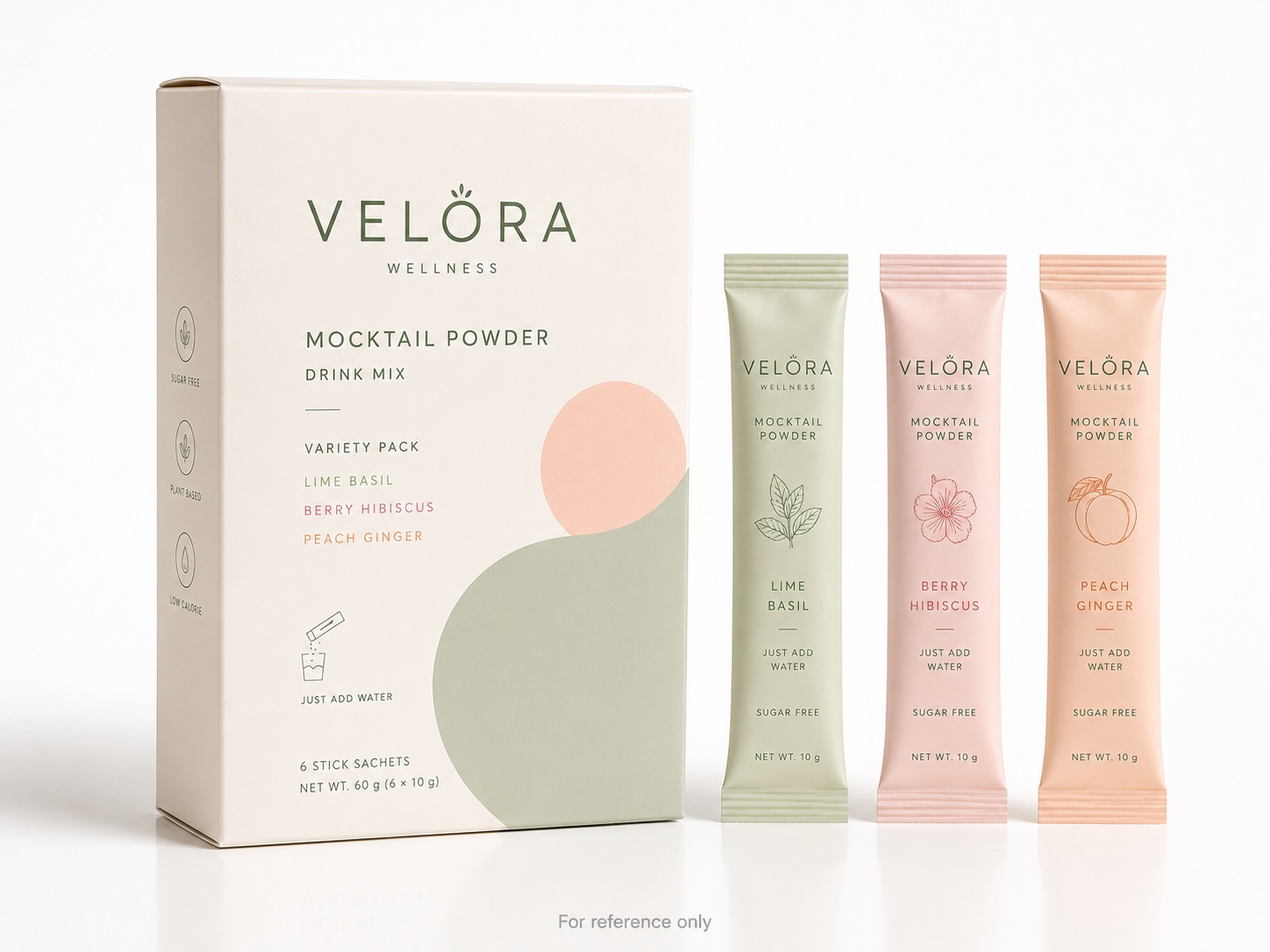
A size concern: “Would 30 × 100mm still work for around 3g powder?”
One of the first questions was about sachet size.
The customer originally considered 30 × 100mm, but we also reviewed 30 × 120mm as a safer option for hand filling and final heat sealing.
Their concern was very practical:
“Since the powder amount may only be around 3g, we are slightly concerned that a 30 × 120mm sachet may feel too empty visually. Do you think something closer to 30 × 100mm could still work while keeping enough sealing tolerance?”
This is a very common first-run packaging question.
A shorter sachet may look more compact when the filling volume is small. But if the sachets are filled by hand, there also needs to be enough working space for filling and sealing.
So the final decision is not only about the outside size.
It also depends on:
how the product is filled
how much space is needed for sealing
whether powder may stay near the sealing area
how the sachet should look after filling
🔵 Why this matters
A small difference in sachet length can affect filling space, sealing tolerance, and the final visual appearance after filling.
Sometimes 10–20mm can make a real difference in the filling experience.
If you are still comparing small-format sachet options, you can also check our Packaging Guides for more basic packaging planning ideas.
A material question: “Can we balance moisture protection, appearance, and startup cost?”
For drink powder packaging, moisture protection is one of the key points.
The customer wanted a good balance between protection, appearance, and cost, especially because this was still the first production run.
Their question was close to this:
“We would like to keep a good balance between moisture protection, nice appearance, and reasonable startup cost. Would Matte PET / VMPET / PE be suitable for this?”
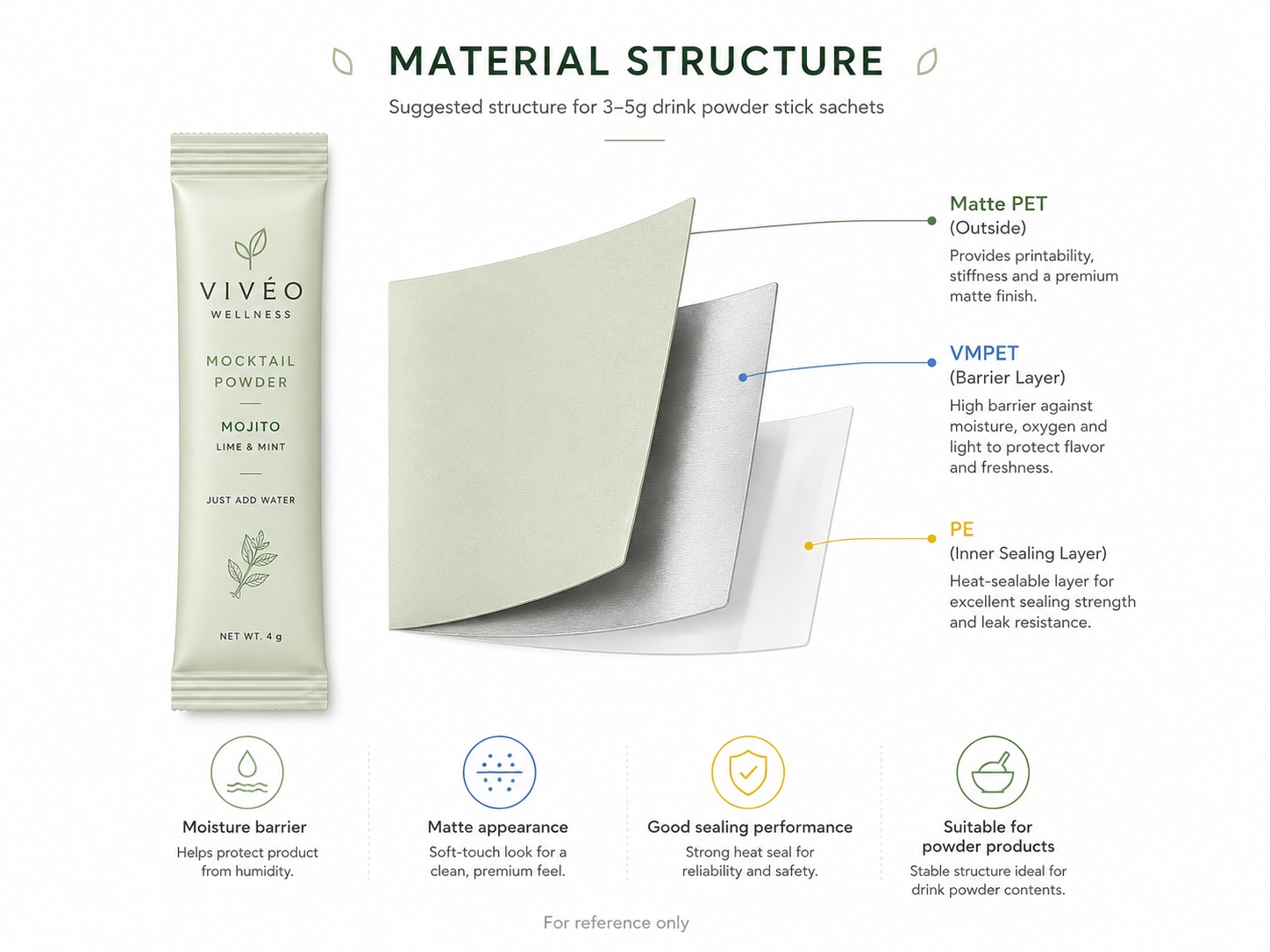
For this kind of powder sachet, we reviewed a laminated structure with a metallized barrier layer:
Matte PET / VMPET / PE
This structure can help balance:
moisture protection
matte visual effect
pouch stiffness
heat sealing performance
cost control
A stronger aluminum foil structure can also be reviewed if the product is very sensitive to moisture, oxygen, light, or aroma loss.
But for a first launch, the strongest structure is not always the most practical one.
Sometimes the better choice is the one that gives enough protection while keeping the first-run budget under control.
🟢 Practical first-run choice
For small-dose powder sachets, the first material choice should usually balance barrier performance, appearance, and startup cost — not only chase the strongest structure.
You can also explore our Material & Printing Tips if you are comparing barrier materials, matte finish, printing effect, or pouch feel.
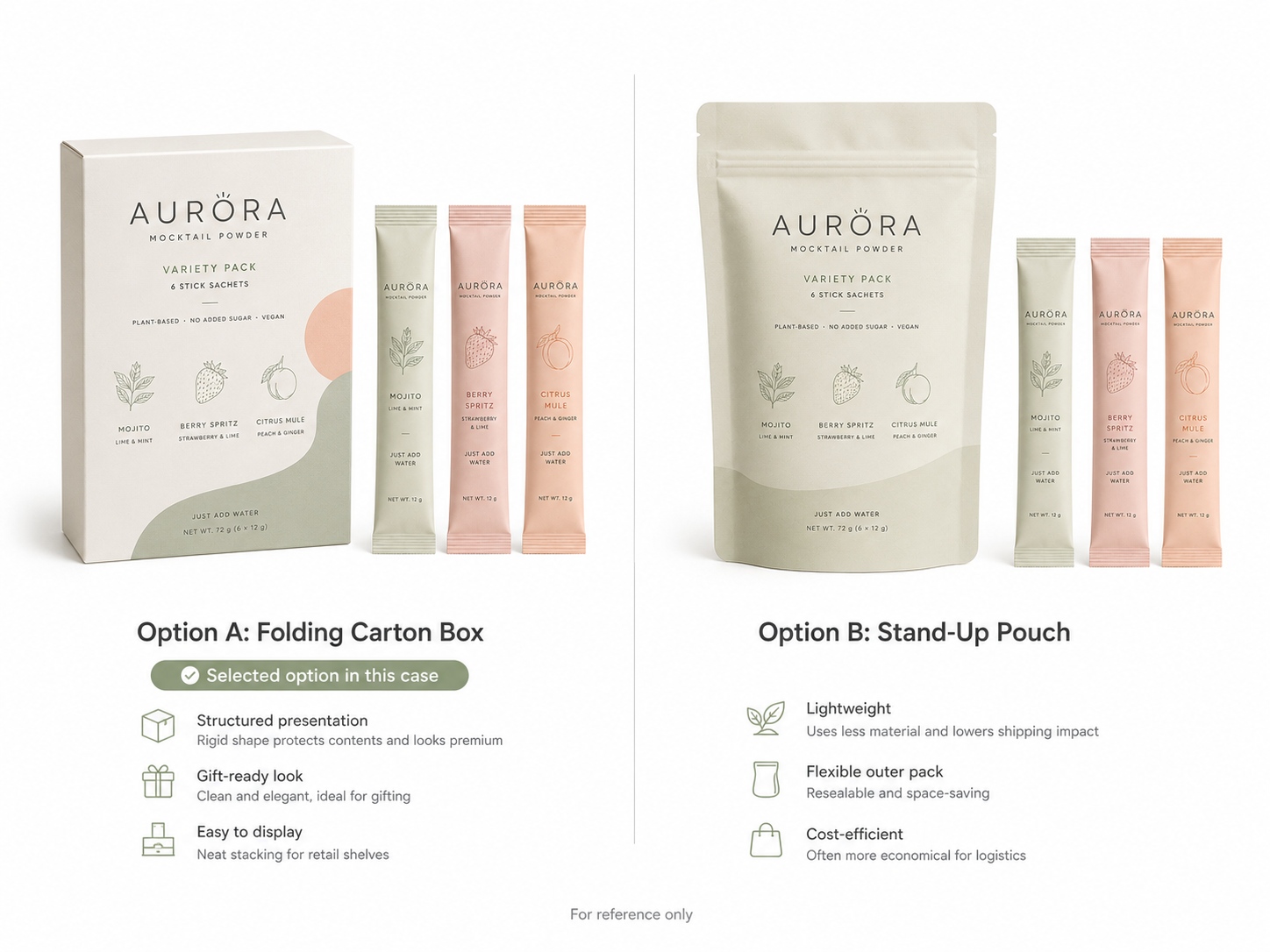
An outer packaging decision: “The folding carton box feels closer to our brand direction.”
The customer also needed an outer retail pack for 6 stick sachets.
We reviewed several directions, including cardboard boxes and a stand-up pouch outer pack.
After comparing the options, the customer felt the folding carton box matched their brand better:
“At the moment, we think the folding carton box option fits our brand direction better than the stand-up pouch, especially for presentation, gifting, and online branding.”
This is also a realistic decision.
A stand-up pouch can be lighter and easier for shipping. A folding carton box can feel more structured, gift-ready, and suitable for brand presentation.
There is no one-size-fits-all answer.
The better choice depends on:
brand positioning
sales channel
shipping cost
retail display style
customer unboxing experience
For this project, the folding carton box direction made sense for the brand style the customer wanted.
🟡 Branding vs. shipping
A folding carton box may feel more gift-ready, while a pouch outer pack may reduce shipping weight. The better choice depends on your launch priority.
If you are still comparing pouch-style and retail-ready outer packaging, you may also want to review our Custom Stand-Up Pouches or visit our Packaging FAQ.
A document question: “Can the packaging materials comply with EU food-contact standards?”
Another important question was about documents.
The customer asked:
“One important point for us is that the packaging materials must comply with EU food-contact standards. Can the related documents or certificates be provided if needed?”
This is a normal concern for food-related packaging.
For this project, the factory could provide a BRCGS Packaging Materials certificate issued by SGS United Kingdom Ltd. The certificate covers flexible packaging materials such as PET, VMPET, PE films, pouches, and roll films.
But one detail is important:
A factory packaging material certificate and a specific food-contact migration test report are not exactly the same thing.
For an early online launch, factory qualification documents may already help the customer review the supplier. For larger retail chains, pharmacies, distributors, or stricter sales channels, more specific material documents may be requested later.
That is why we normally check the customer’s sales stage and sales channel before suggesting what documents are necessary.
🔵 Important note
A factory qualification certificate and a specific food-contact migration test report are not always the same thing.
For many first-time buyers, packaging documents can be confusing. Related questions can also be found in our Packaging FAQ.
A shipping concern: “Will the total landed cost still make sense?”
After the packaging direction became clearer, the customer asked a very real business question.
They were not only comparing unit prices. They were comparing the full setup:
production cost
shipping cost
import handling
VAT and customs process
local supplier alternatives
Their concern was close to this:
“We are still comparing different suppliers and production setups. Import handling, shipping, VAT, customs procedures, and logistics are also important factors for us.”
This is one of the most important questions for startup brands.
A low product price alone is not enough. The customer needs to understand whether the full landed cost still makes sense.
For low MOQ custom packaging, China production can still be flexible and cost-efficient, especially when the customer needs custom sizes, custom printing, and small first-run quantities.
But the import process must be explained clearly enough, without making the customer feel lost.
In this project, we also checked a simplified delivery option where the forwarder could handle the main import process, customs clearance, and final delivery together within the shipping cost.
For customers who are importing for the first time, this kind of option can make the first order easier to manage.
🟡 What customers really mean
When customers ask about shipping and import, they are often asking whether the full project still makes commercial sense after all extra costs.
For first-time custom packaging projects, the product price is only one part of the decision. You can start with our Packaging Guides or contact us directly with your basic product details.
What this inquiry really showed
This inquiry was not just about quoting a sachet.
It showed many small but important decisions behind a first-run packaging project:
Will the sachet be hand-filled or machine-filled?
Will the powder amount make the sachet look too empty?
How much sealing space is needed?
Is the material strong enough for moisture protection?
Should the outer pack focus more on shipping weight or brand presentation?
What documents are needed at this stage?
Will the total landed cost still be reasonable after shipping and import handling?
These questions often appear before a first production run.
And many of them cannot be answered only by a price list.
The real result: the customer is still comparing options
At the moment, this customer is still reviewing everything internally and comparing different suppliers.
And honestly, this is completely normal.
If we were in the position of a startup brand preparing a first production run, we would probably do the same thing: compare different options, understand the total cost, check the material, review the shipping process, and make sure the first step is not rushed.
Custom packaging is not only about buying bags or boxes.
It affects product presentation, filling experience, moisture protection, shipping cost, import process, and the first impression customers have when they receive the product.
So taking time to compare carefully is not a bad thing. It is part of building a more stable product launch.
🟢 Our service mindset
Even if a customer is still comparing options, we believe responsible communication and practical packaging support are still part of good service.
For us, every serious inquiry is also a chance to learn more about different markets, different startup concerns, and different packaging decisions. Even if a customer finally decides to work with another supplier, that is completely okay.
We can still keep in touch.
Whenever a brand has questions about packaging materials, pouch structure, outer packaging, artwork, samples, shipping, or first-run cost control, we are happy to discuss and share what we can.
At TM-Future, we believe responsible communication is part of good packaging service.
Sometimes the first conversation does not immediately become an order. But if it helps a customer understand their packaging direction more clearly, it is still meaningful.
Planning a similar powder sachet project?
If you are preparing packaging for drink powder, supplement powder, instant beverage powder, sample powder, or other small-dose products, you do not need to have everything ready before asking.
A simple mockup, product weight, filling method, target quantity, and reference packaging style are already enough for us to start reviewing the direction with you.
Small details such as sachet size, material structure, sealing space, outer packaging, and shipping method can affect the final cost and user experience.
Whether you decide to work with us or are still comparing different packaging options, you are welcome to contact TM-Future anytime.
We are happy to discuss practical packaging questions with you and help you understand what may work better for your first production run.
Need help checking your first packaging idea?
Please contact TM-Future with your product details, target quantity, filling method, and reference packaging style.