
Jun 26, 2026
Can I Use the Same Pouch for Different Products?
Can one pouch work for different products? A simple guide to weight, shape, barrier, filling method, and choosing the right custom pouch.
Can I Use the Same Pouch for Different Products?
Many new and old customers ask us a very simple question before:
“Can I use this same pouch for my product?”
The answer is:
Maybe. But we need to check what goes inside first.
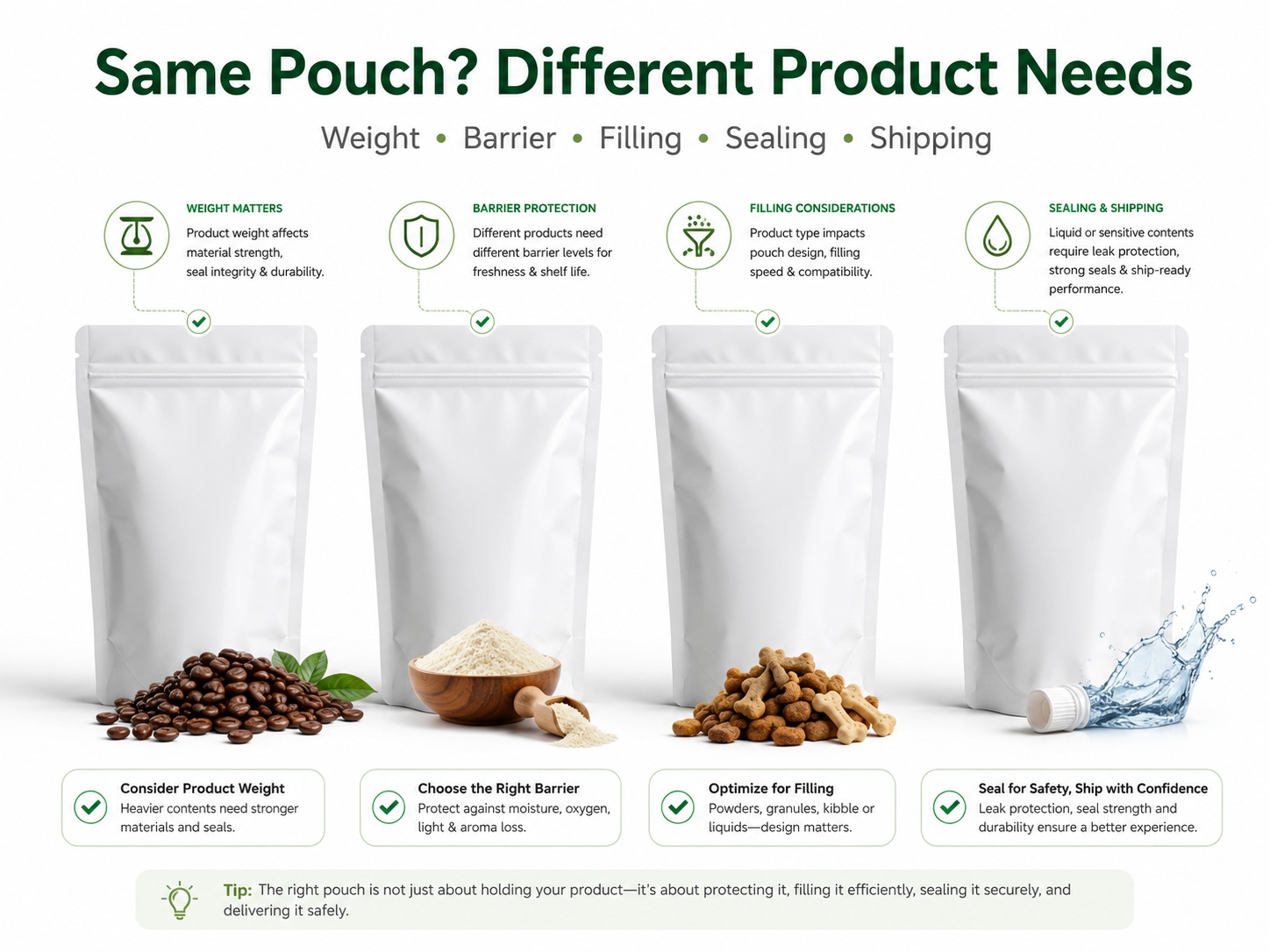
A pouch can look almost the same from the outside.
But different products may need very different packaging.
A coffee pouch, a powder pouch, a snack pouch, and a pet food pouch may all look similar.
But they do not behave the same after filling, sealing, shipping, and storage.
That is why we usually ask a few questions before suggesting a pouch.
Not because we want to make things complicated.
We just want to help you avoid choosing the wrong bag.
If you are wondering why pouch size is not the only thing we ask about, you can also read: Why We Ask More Than Just Pouch Size.
1. Product weight matters
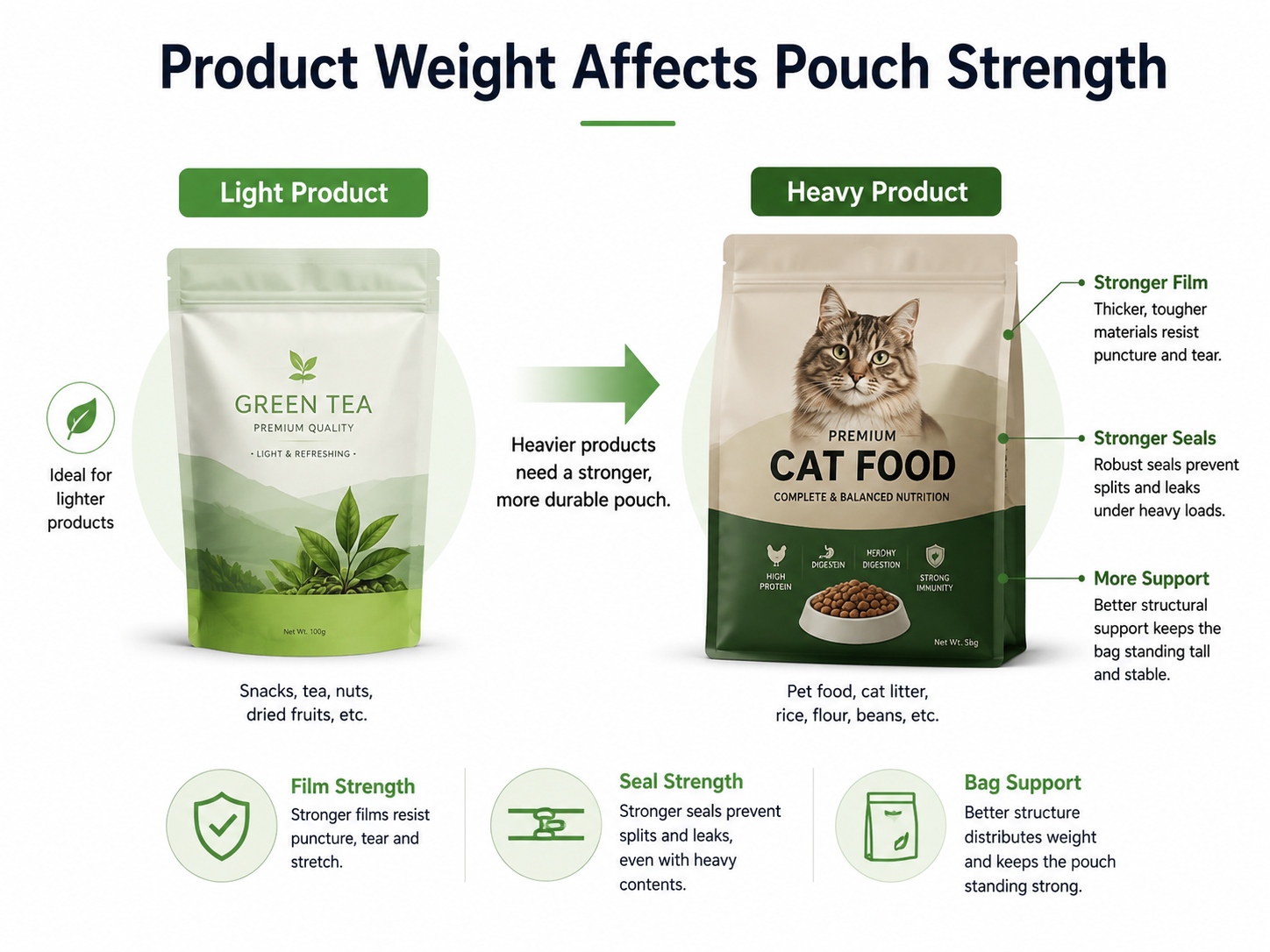
A small tea pouch and a heavy pet food pouch may both be stand-up pouches.
But they do not need the same strength.
Heavier products need stronger film and better sealing.
If the pouch is too light, it may break, leak, or lose shape during shipping.
✅ Quick tip:
Do not choose a pouch only by size.
Always check the product weight first.
2. Product shape matters too
Some products are soft.
Some are hard.
Some are sharp.
Some are oily.
Some are very fine powder.
These details affect the pouch.
For example, granola may have sharp edges.
Powder may get stuck near the zipper.
Pet treats may need stronger material.
Liquid or refill products need better sealing.
The bag may look simple.
But the product inside decides many details.
We once checked a snack product with hard, sharp edges. The customer first focused on the artwork, but the product itself needed stronger packaging to reduce puncture risk during shipping.
✅ Quick tip:
If your product is sharp, oily, powdery, or heavy, tell your supplier early.
3. The same size does not always hold the same amount
This is very common.
We once had a customer using the same pouch size for tea and powder. The powder filled nicely, but the tea looked too full because loose tea takes much more space. So we adjusted the pouch size slightly for the tea version.
A 100g pouch does not mean it can hold 100g of every product.
Loose tea takes more space.
Powder may take less space.
Snacks may leave more air gaps.
Pet food may need more room because of shape.
So when you say “I need a 250g pouch,” we still need to know what product it is.
✅ Quick tip:
Send your product type, target weight, and a product photo if possible.
It helps us suggest a better pouch size.
If this sounds like your situation, this article may also help: For Loose Leaf Tea, 100g Does Not Always Mean the Same Pouch Size.
4. Different products need different protection
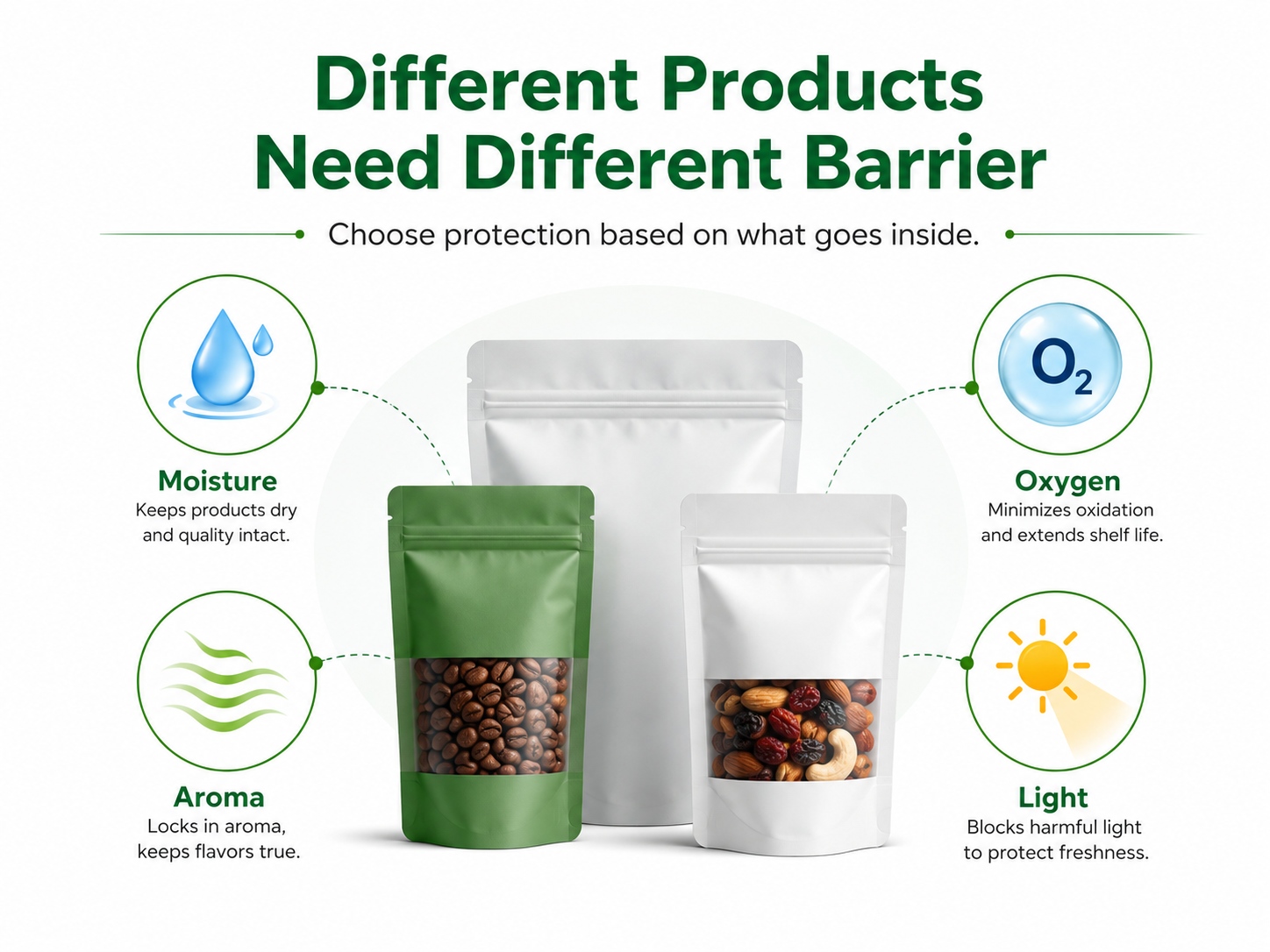
Some products need moisture protection.
Some need oxygen protection.
Some need light protection.
Some only need a simple bag for short shelf life.
For example:
🟢 Coffee needs aroma protection.
🟢 Powder often needs moisture protection.
🟢 Snacks need freshness and good sealing.
🟢 Frozen food needs material suitable for low temperature.
🟢 Liquid products need stronger sealing to avoid leaking.
So even when two pouches look similar, the inside material may be different.
✅ Quick tip:
A pouch photo cannot tell the full material structure.
The product need is more important than the look.
If you are comparing small-batch testing and bulk production, you can read: Digital Printing vs Gravure Printing for Custom Pouches.
5. Filling method is also important
Will you fill the pouch by hand?
Or by machine?
This changes the pouch choice.
Machine filling may need a different opening size, film stiffness, or bag shape.
Hand filling may be more flexible.
If we know your filling method early, we can avoid problems later.
✅ Quick tip:
Tell your supplier whether you fill by hand, semi-auto machine, or full packing line.
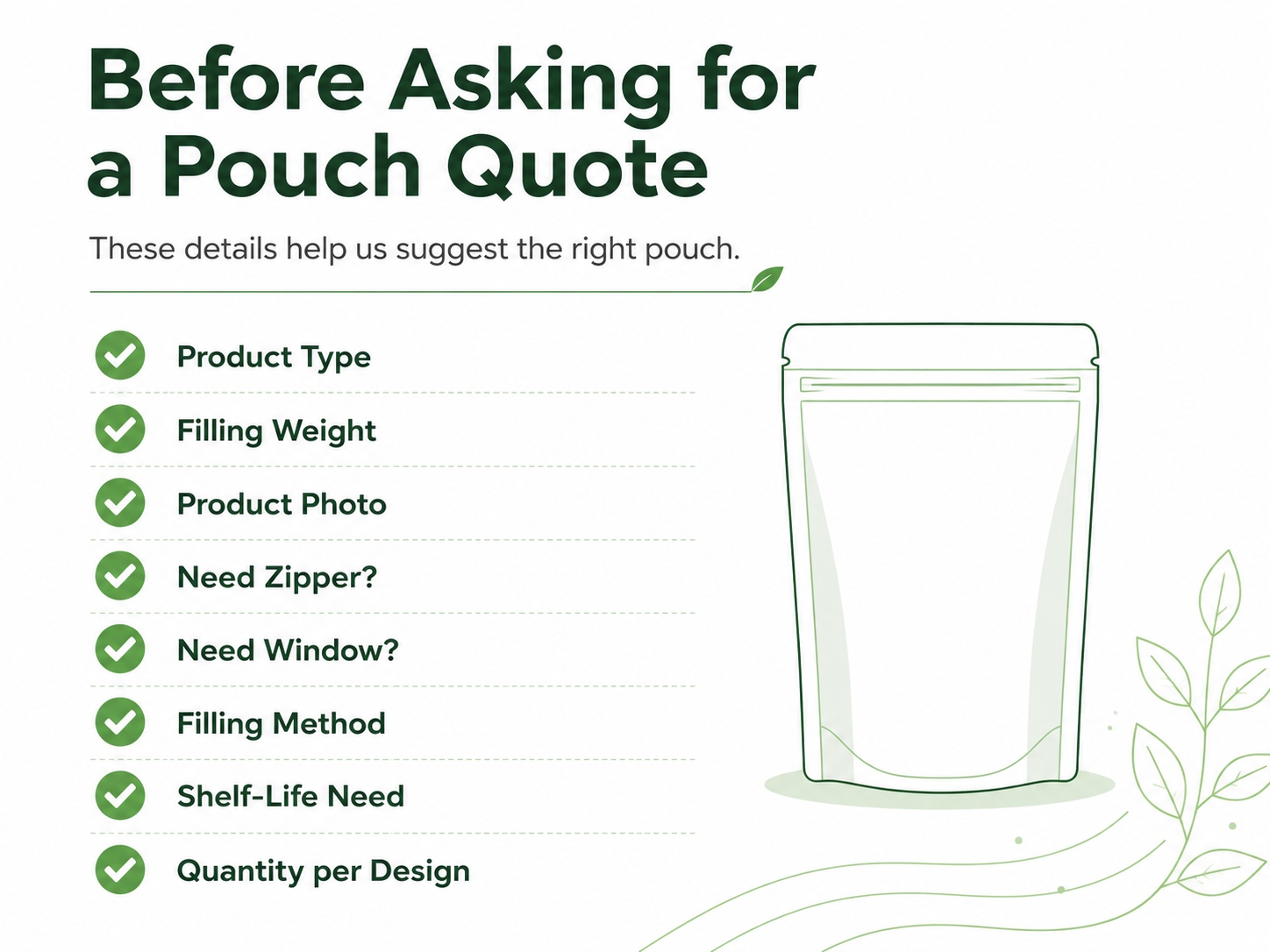
Before asking for a pouch quote
You do not need to know all the technical details.
Just prepare these simple things:
✅ Product type
✅ Filling weight
✅ Product photo
✅ Need zipper or not
✅ Need window or not
✅ Filling by hand or machine
✅ Quantity per design
✅ Sample pouch photo if you have one
With these details, we can give a much more practical suggestion.
If you are new to custom packaging, our Custom Pouch Packaging Guide for Beginners may help you prepare the basic details step by step.
Final thought
It is okay to use another pouch as inspiration.
Actually, that is a good way to start.
But the best pouch is not just the one that looks nice.
It is the one that fits your product, filling process, storage, and shipping.
So before choosing a pouch, start with one simple question:
What will go inside?
At TM-Future, we help brands choose custom flexible packaging based on real product needs, not just pouch photos.
If you are not sure where to start, send us your product details.
We can help you check the pouch size, material, printing method, and MOQ step by step.
For one new product launch, the customer had several flavors but was not sure which one would sell best. Instead of ordering one large batch for each flavor, they started with a smaller digital print run first. It helped them test the market with less packaging stock.